LunarWeave
The Danube Can Take Hungary’s Nuclear Plant Offline. It Cannot Replace It.
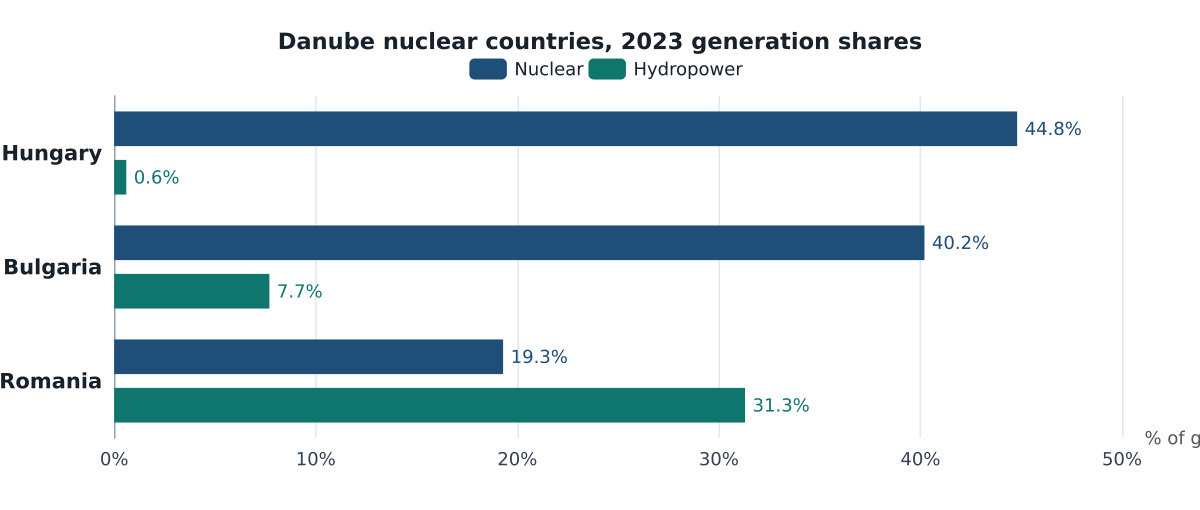
In 2023 Hungary generated 45 percent of its electricity from nuclear and 0.6 percent from hydro. A low Danube can take the plant offline; it cannot replace it.
Standalone, data-led research into the questions behind the news.
In 2023 Hungary generated 45 percent of its electricity from nuclear and 0.6 percent from hydro. A low Danube can take the plant offline; it cannot replace it.
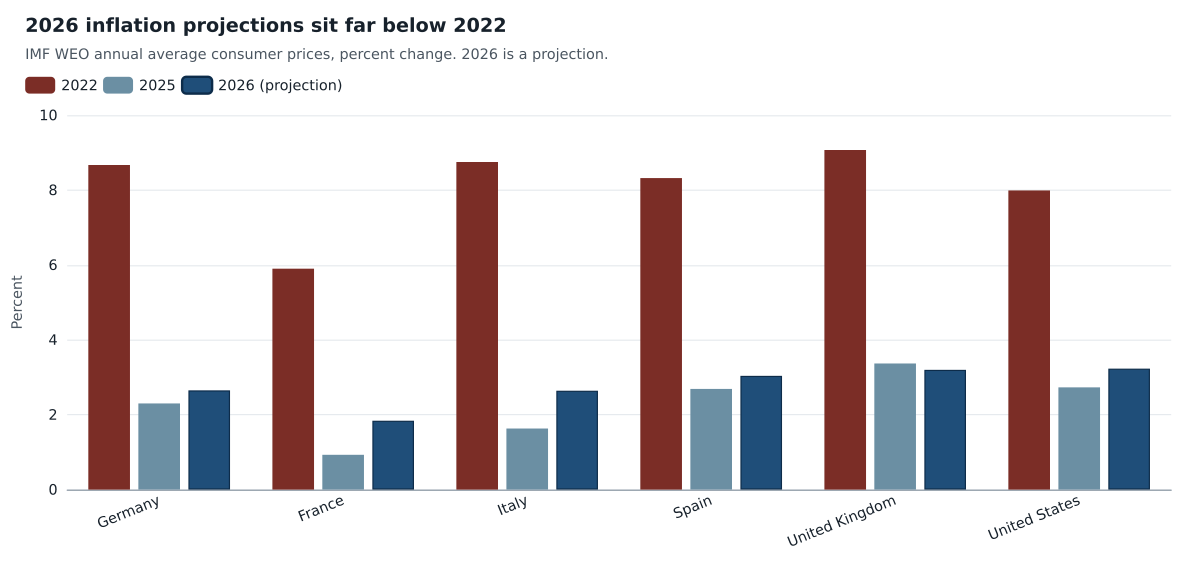
IMF annual inflation in Germany, France, Italy and Spain has not returned to 2022. A 3 percent print is a rebound, not a second energy-crisis peak.
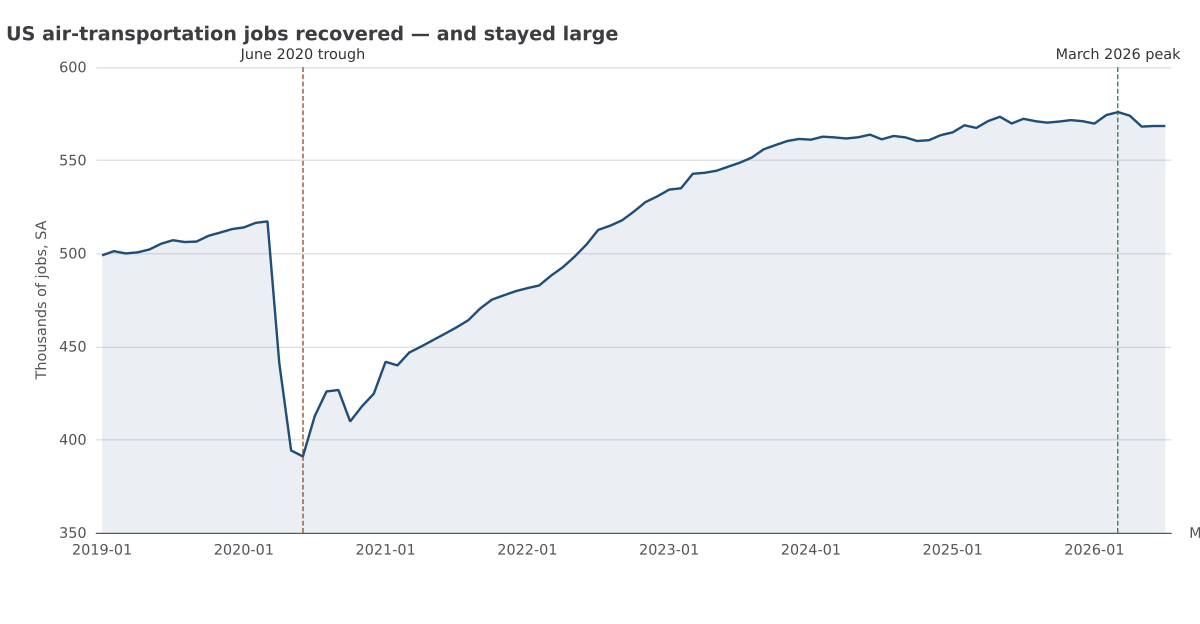
US air-transportation jobs in mid-2026 were still well above 2019. The cost pressure is in wages and hours, not a 2020-style payroll collapse.
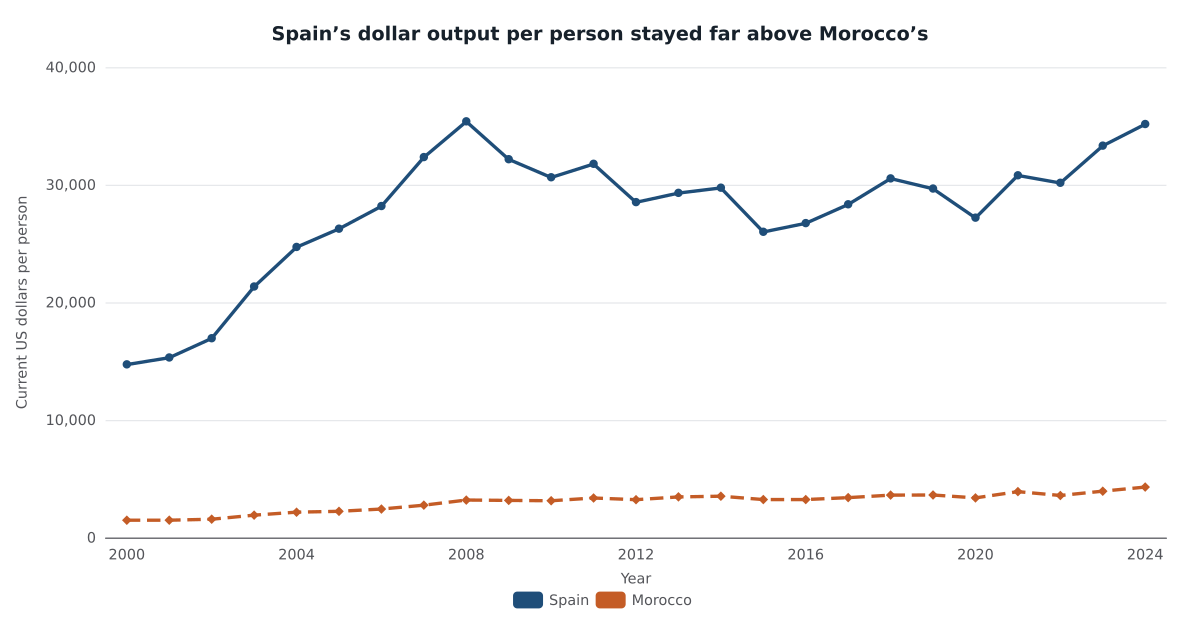
Spain still produces about eight times as much dollar output per person as Morocco. Headline unemployment is not the gap that explains Ceuta.
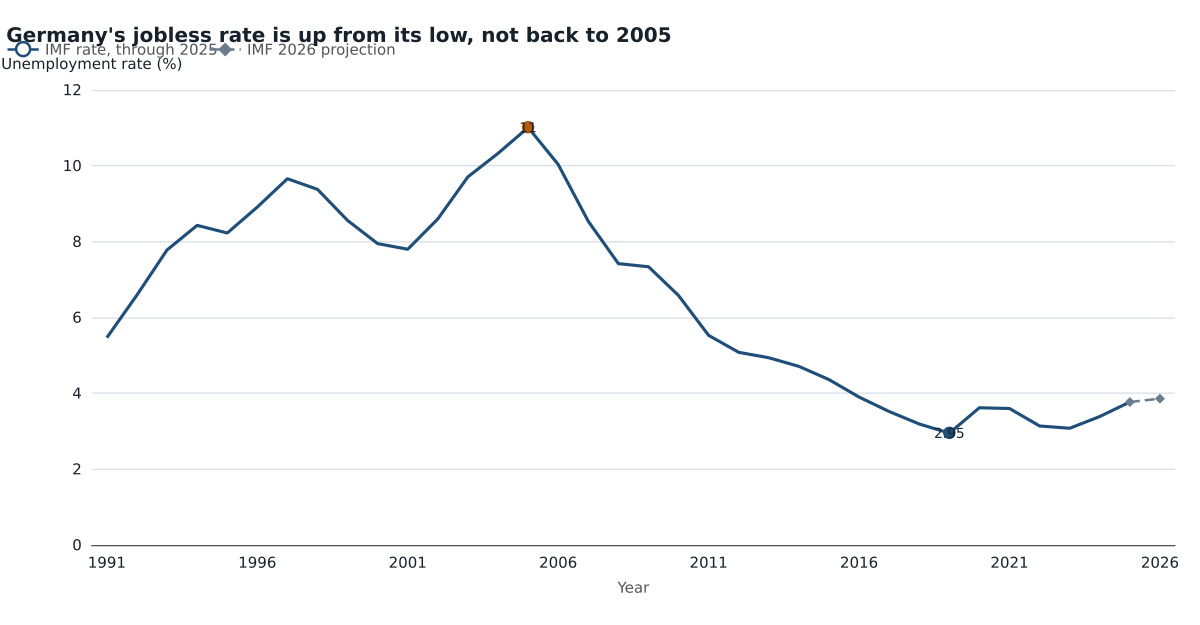
Germany’s IMF unemployment rate rose to 3.8 percent in 2025 from a 2.95 percent low in 2019, still far below the 11 percent peak of 2005, while employment stayed near 42.5 million.
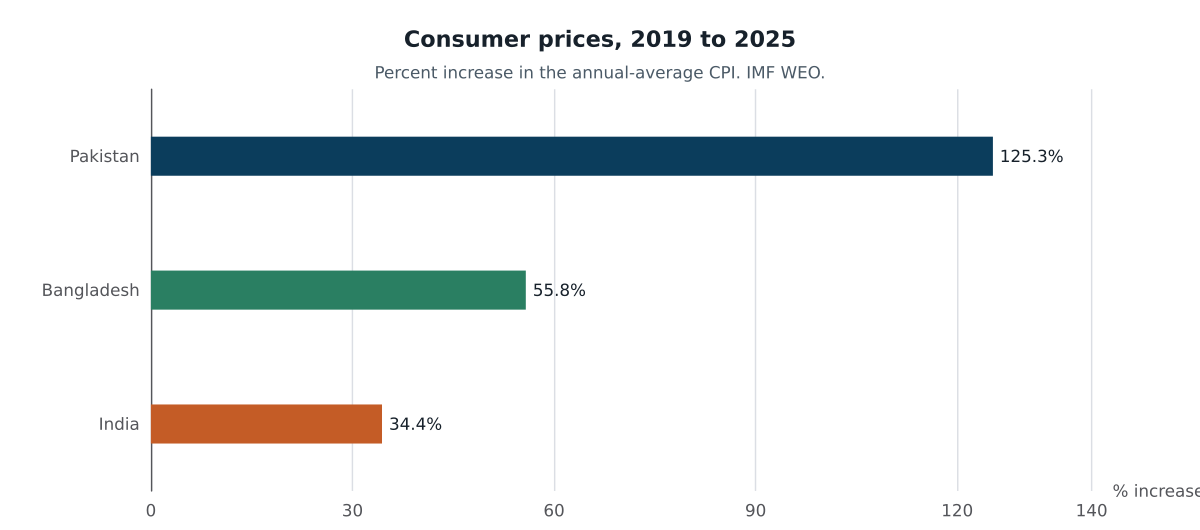
IMF accounts show Pakistan’s consumer prices rose 125 percent from 2019 to 2025. Inflation cooled in 2025 without reversing that level, then turned back up.
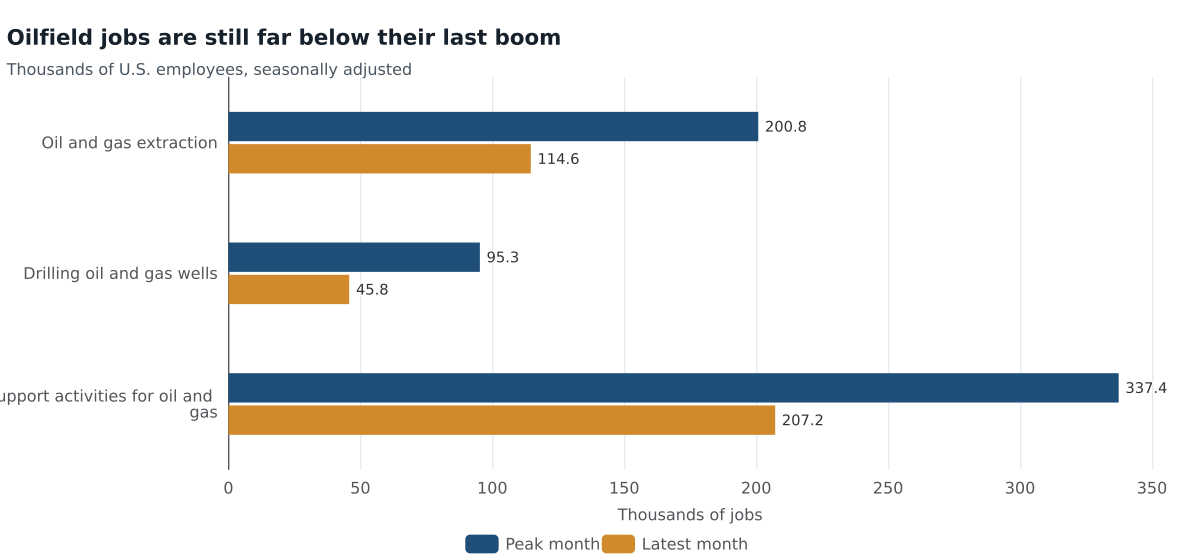
U.S. oilfield payrolls remain about 40 percent below their 2014 peak; the 2026 price spike is not a hiring boom.
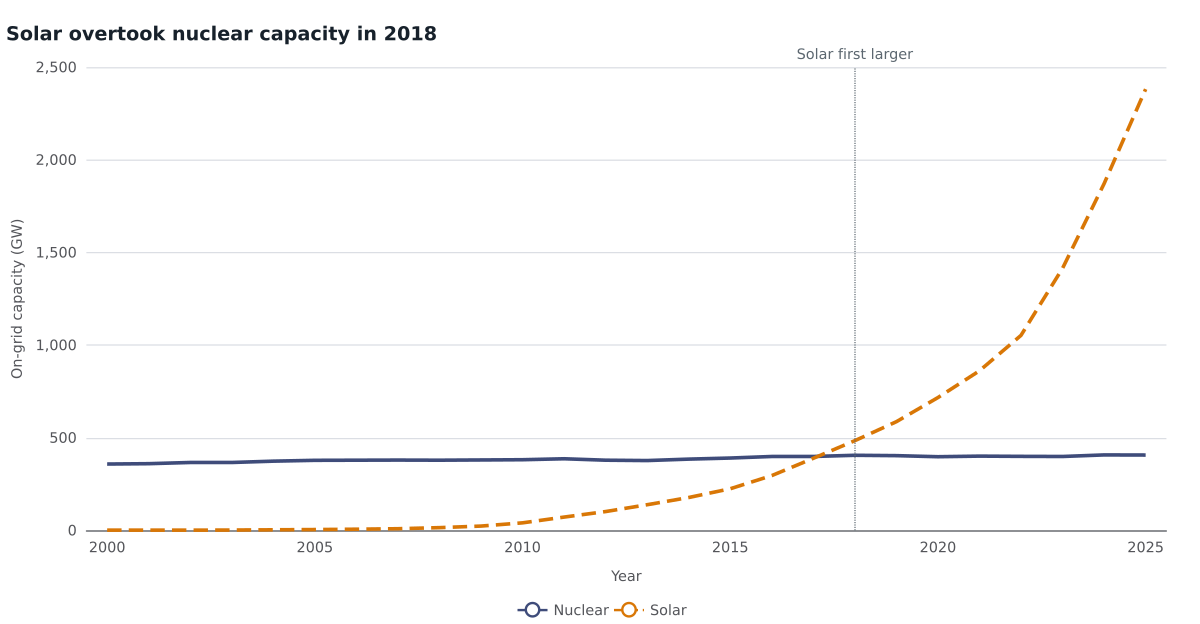
World on-grid solar capacity overtook nuclear in 2018 and is now nearly six times larger, but nuclear still generated more electricity than solar in 2023. Almost all net nuclear growth since
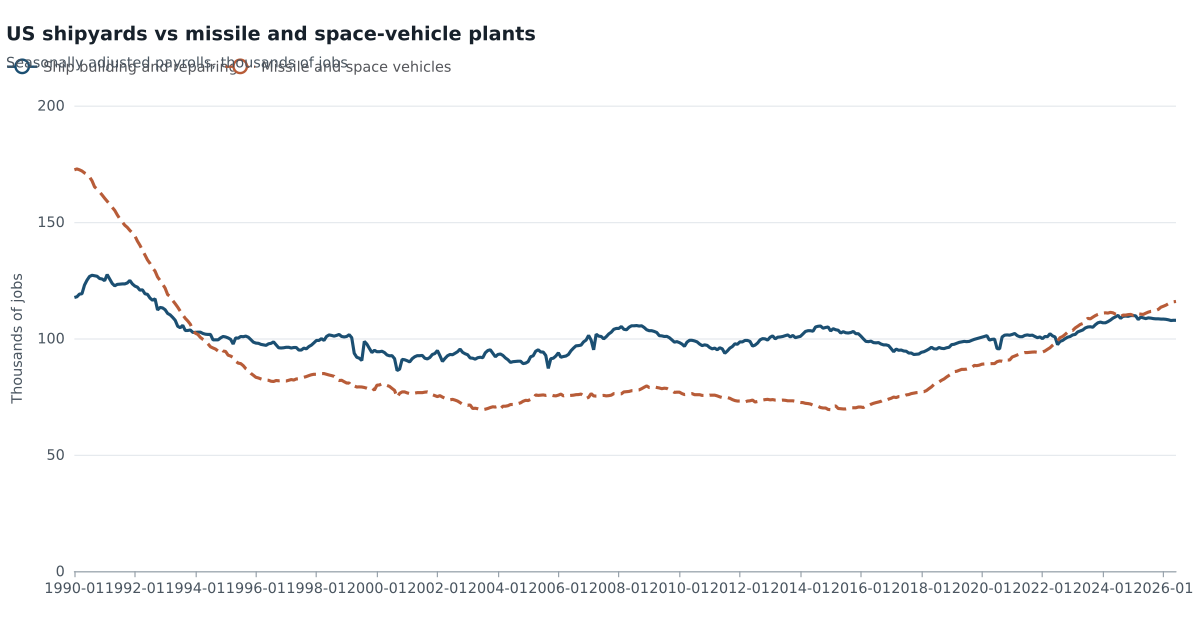
US shipyard payrolls have barely grown since 2015, even as missile-and-space plants hired. A look at BLS factory jobs behind the defense-stock boom.
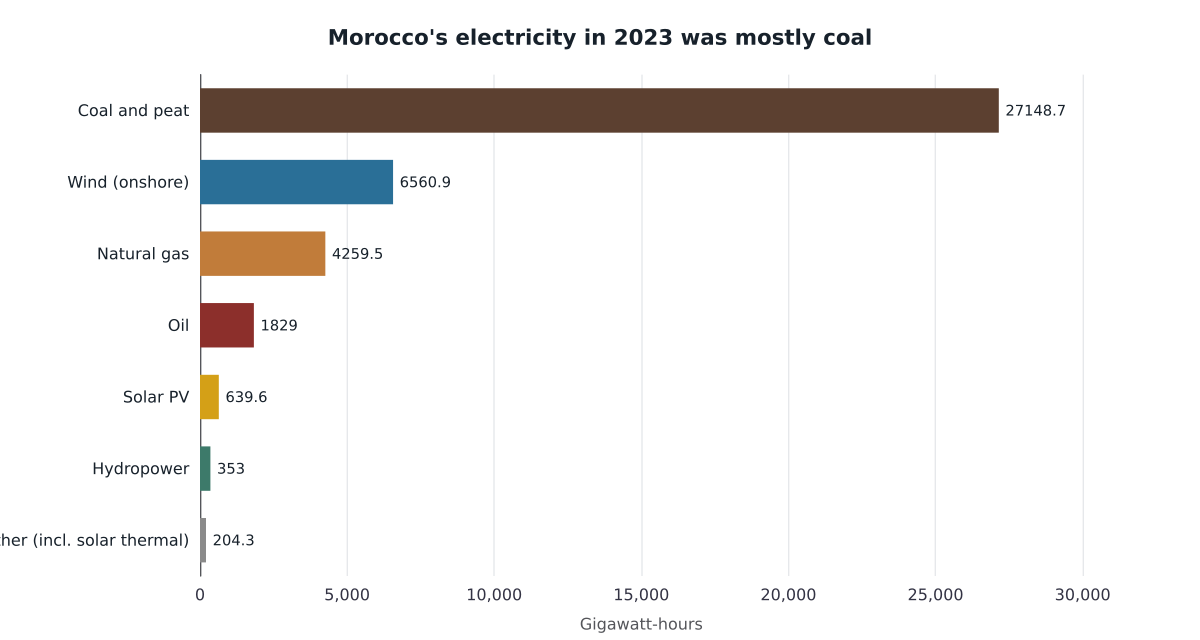
Africa’s first EV battery gigafactory is planned for Morocco, but IRENA data show coal still supplied two-thirds of Moroccan electricity in 2023.
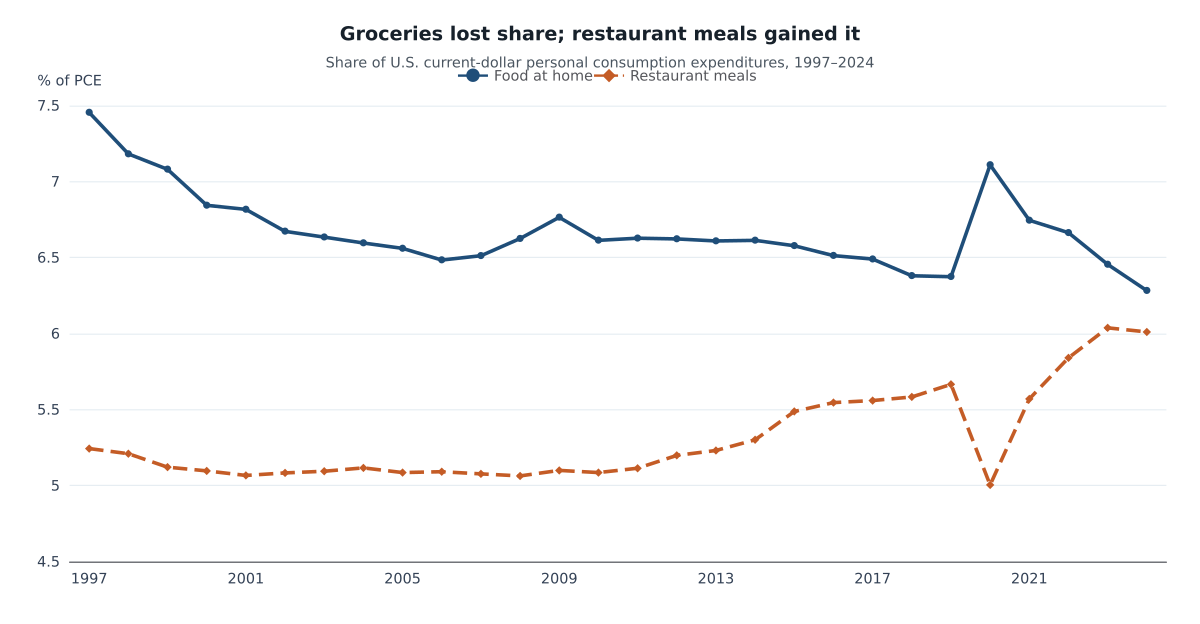
BEA spending accounts through 2024 show food at home taking a smaller slice of U.S. consumption after the post-2019 grocery-price jump, with a much larger gap between states than between yea
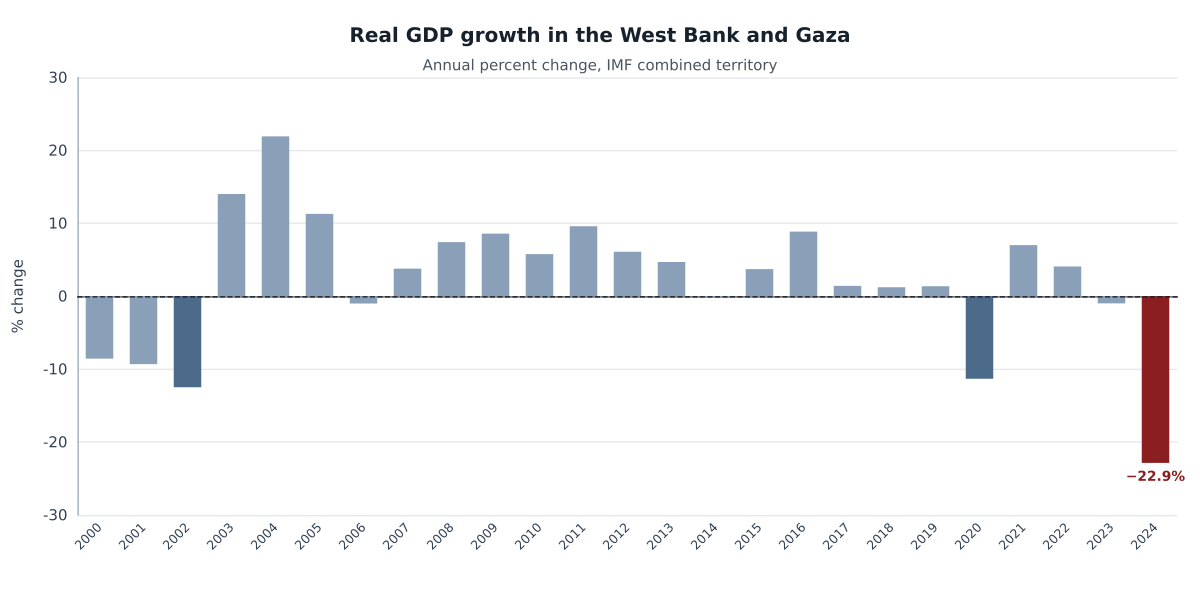
IMF accounts for the combined West Bank and Gaza show a 22.9 percent real-GDP drop in 2024, the worst year in the series, with no published 2025 output path.