LunarWeave
The Information Boom Is In Output, Not In California Payrolls
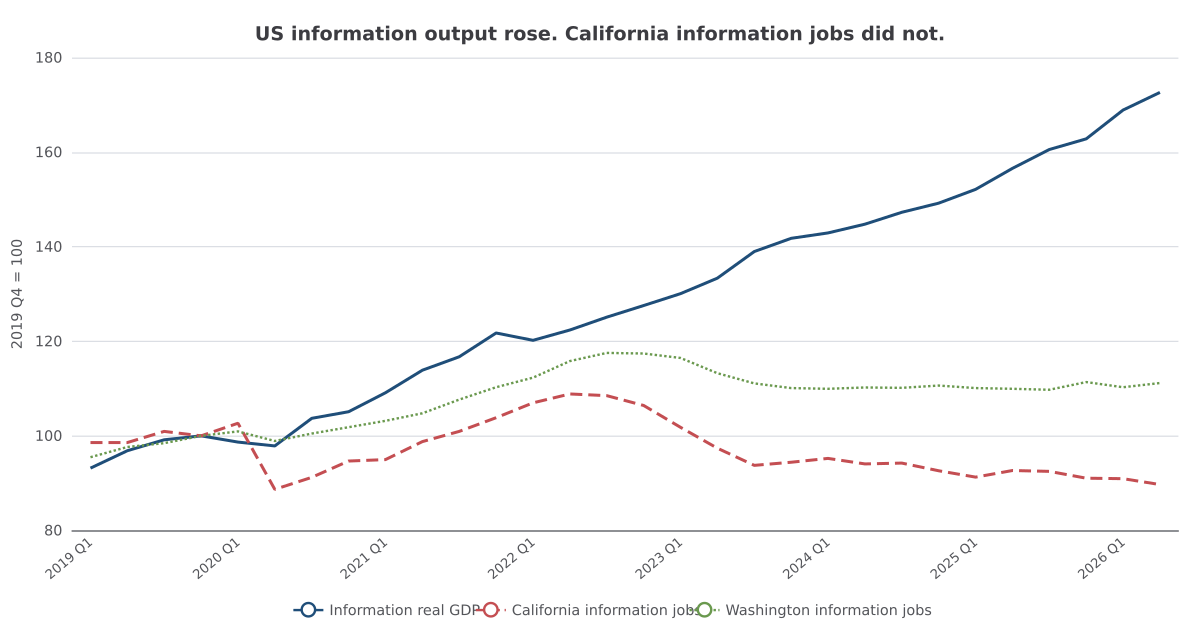
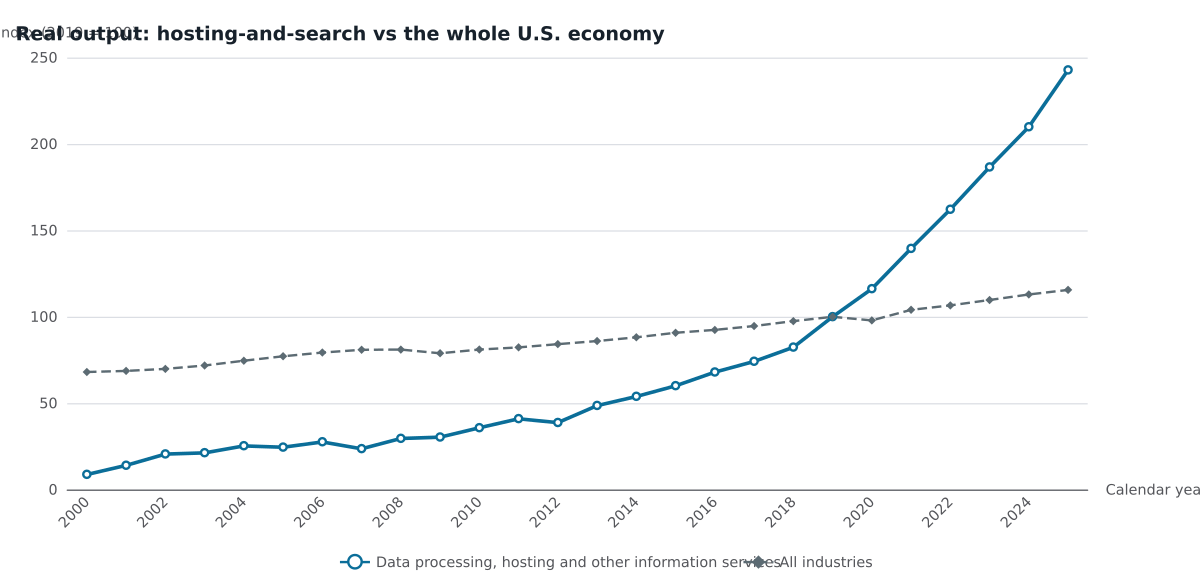
US information-sector output was still rising several times faster than the whole economy in mid-2026, while California information payrolls were already 19 percent below their 2022 peak.
Standalone, data-led research into the questions behind the news.
US information-sector output was still rising several times faster than the whole economy in mid-2026, while California information payrolls were already 19 percent below their 2022 peak.
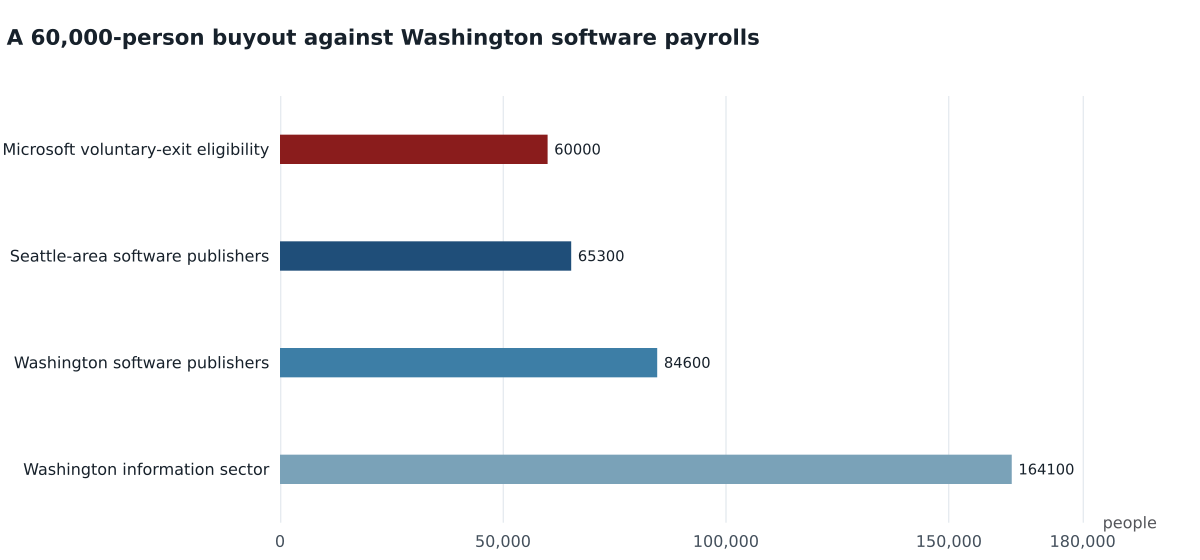
Microsoft’s 60,000-person voluntary-exit pool is 92 percent as large as Seattle-area software-publishing employment, a payroll already 16.6 percent below its 2022 peak even as Washington inf
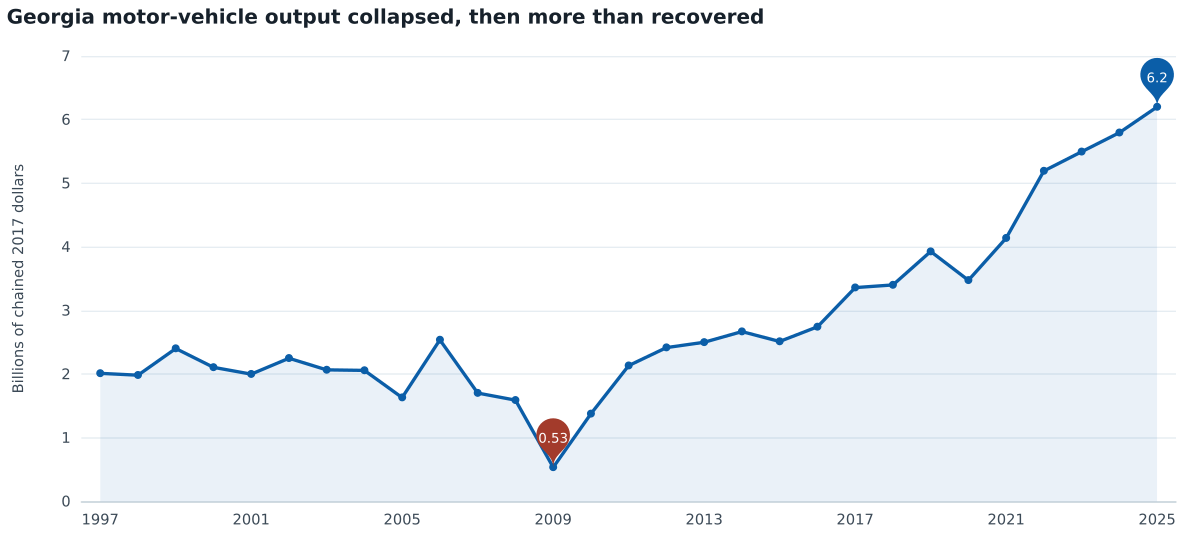
Georgia’s motor-vehicle industry collapsed in 2009 and came back. Audi’s $4 billion plant is large for that rebuilt, still-small auto state.
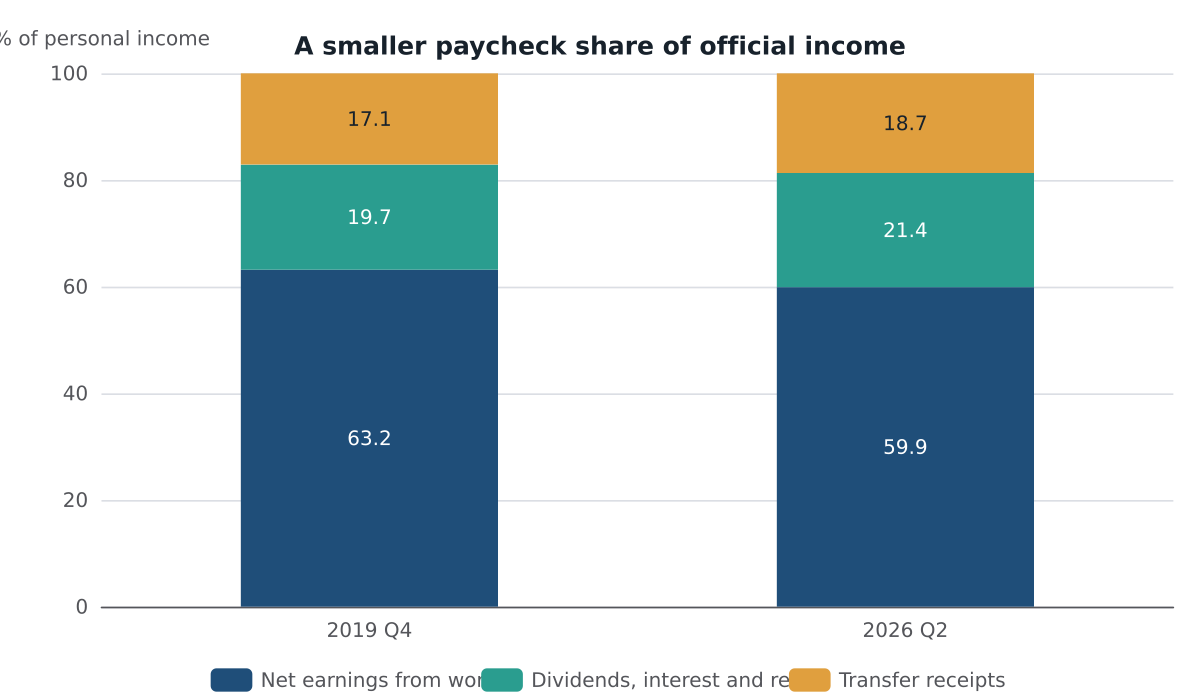
Work is a smaller slice of U.S. personal income than before the pandemic. Transfers and asset income grew faster than wages.
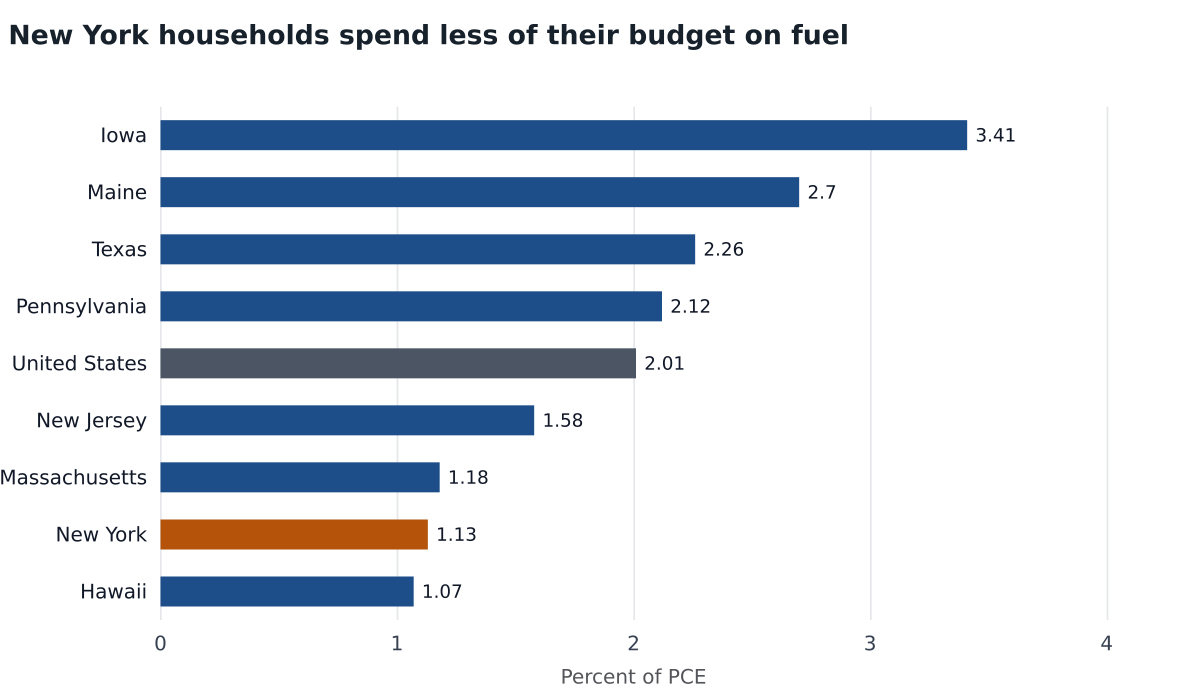
A diesel cargo bound for New York does not mean New York households spend the most on fuel. In 2025 they ranked 50th of 51 on energy goods as a share of consumption.
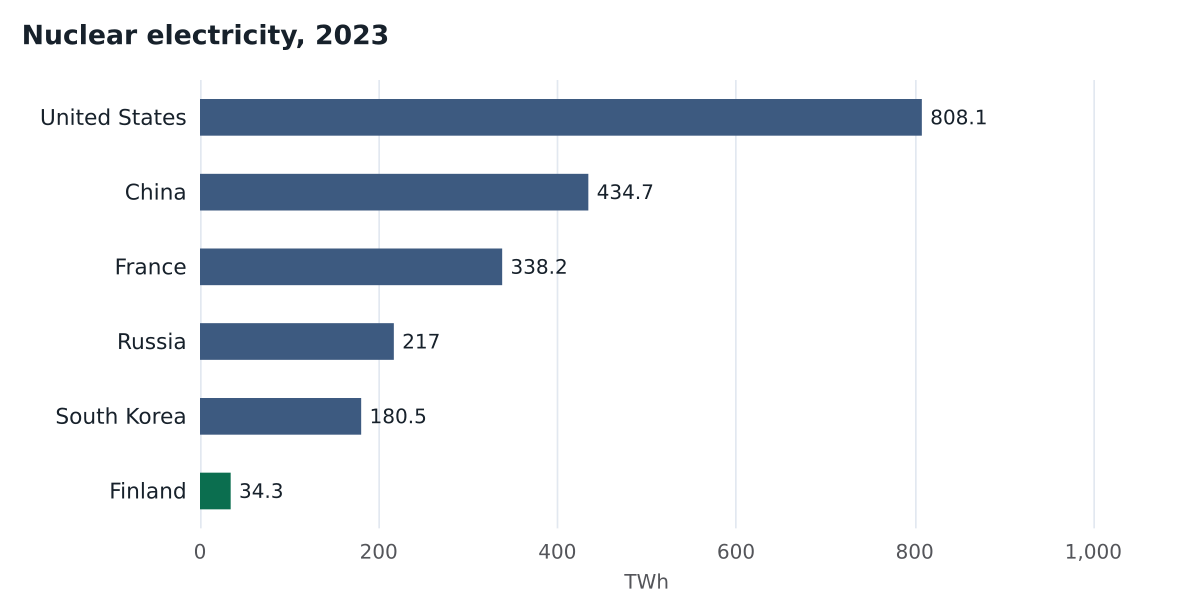
Finland licensed the first permanent high-level nuclear-waste repository. IRENA electricity data show it is a high-share, small-volume nuclear country: 42% of its power, 1.3% of recorded nuc
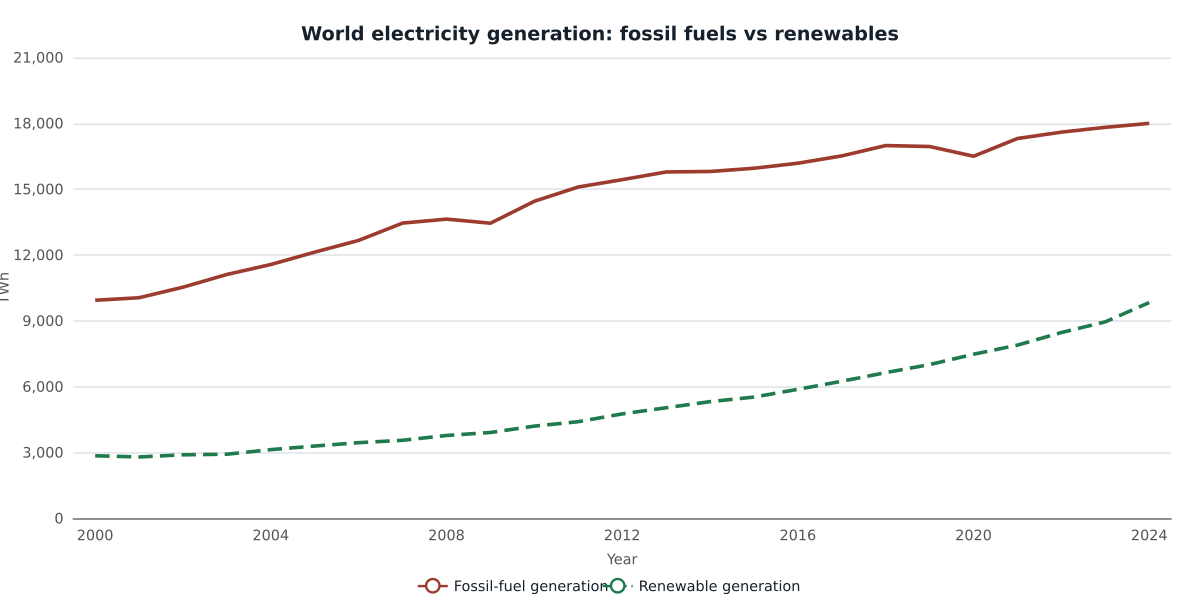
IRENA world data show renewable capacity overtaking fossil-fuel capacity in 2025 while fossil electricity generation was still at a record.
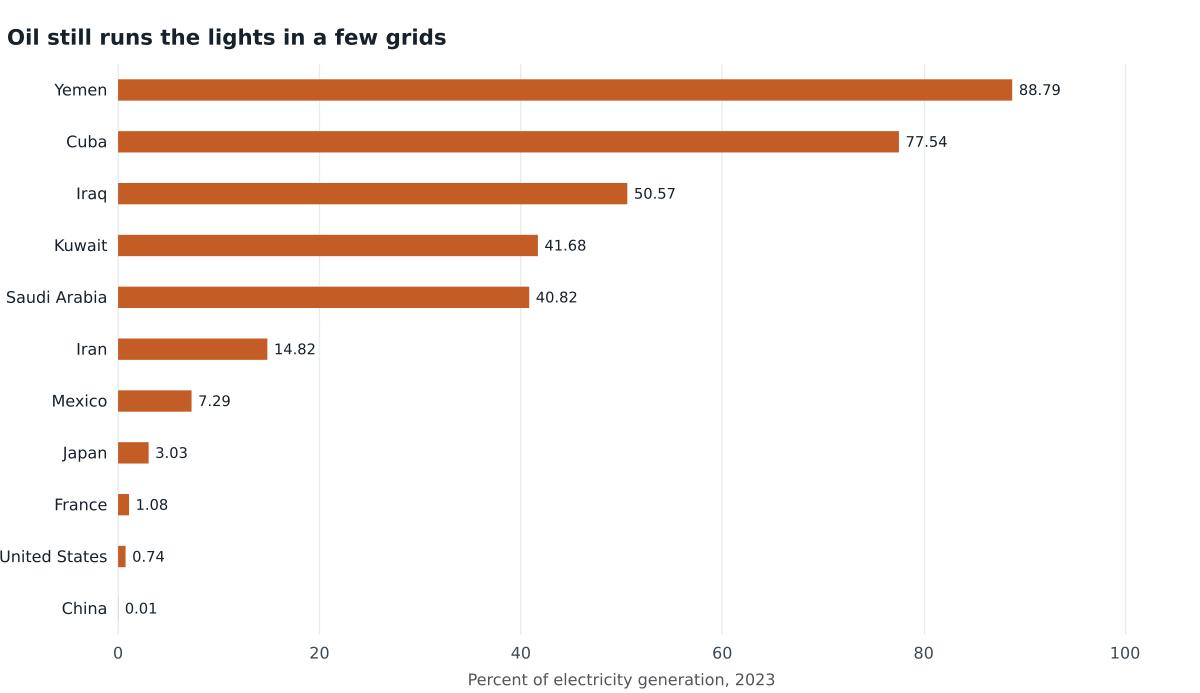
IRENA accounts show oil-fired electricity falling to 2.4 percent of world generation by 2023, with the remaining kilowatt-hours concentrated in Saudi Arabia, Iraq, Kuwait and Iran.
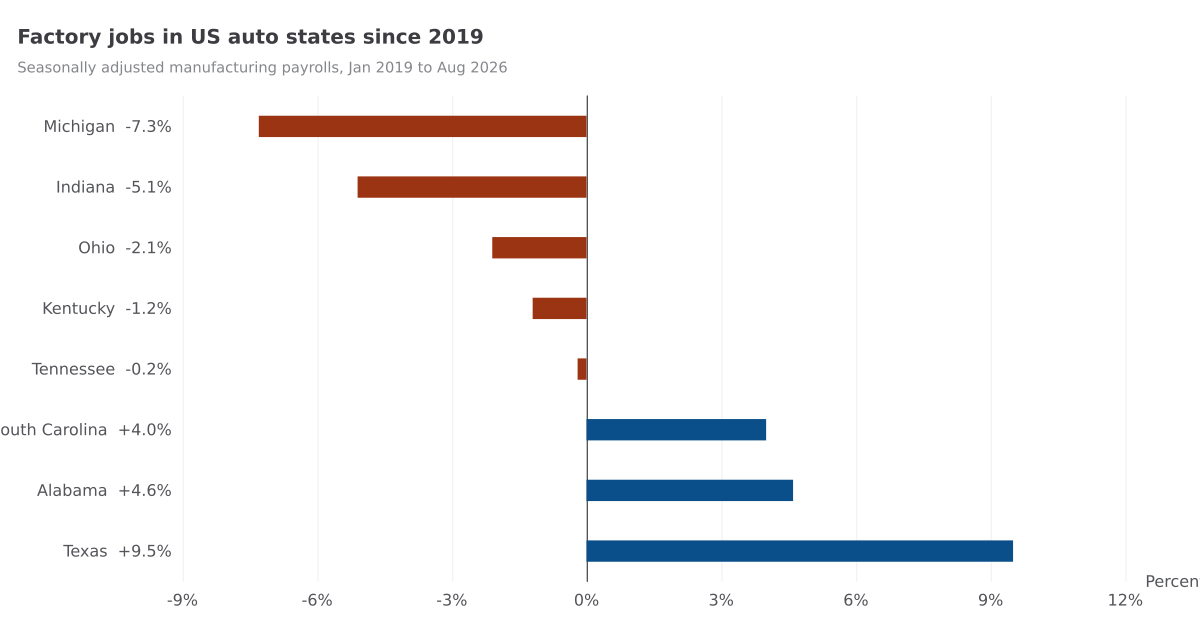
US motor-vehicle manufacturing output is 36 percent above 2019. Auto-state factory jobs are mixed: Michigan is down, Texas and the South are not.
BEA accounts show data processing, hosting and internet search already at 1.9 percent of U.S. GDP and about a ninth of 2025 real growth, with value added concentrated in California and Washi
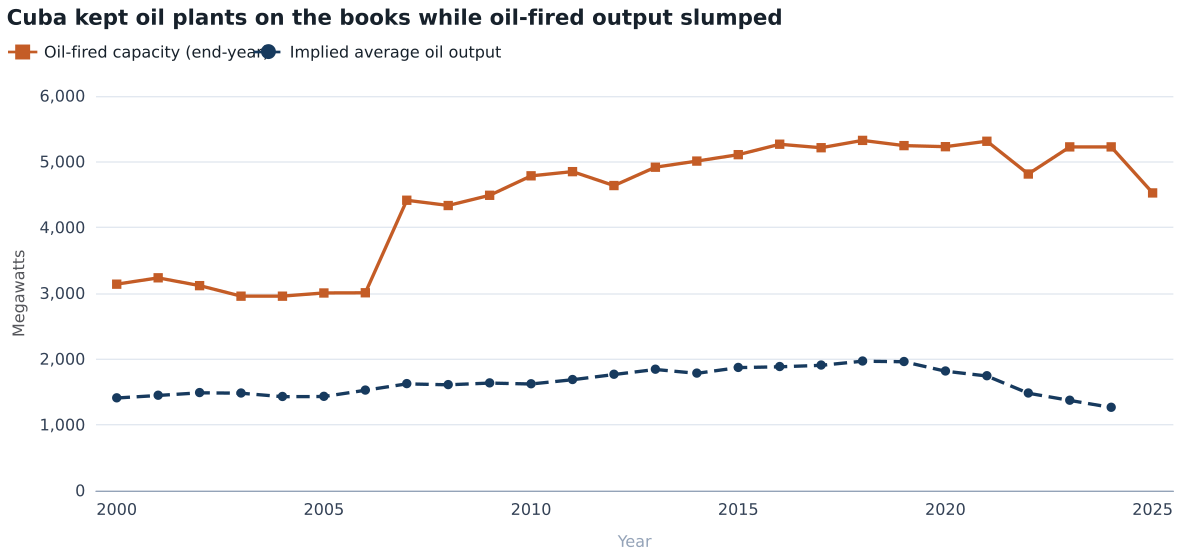
Cuba's October blackout hit an oil-fired grid that had already lost nearly a third of its electricity since 2018 while keeping most plants on the books.
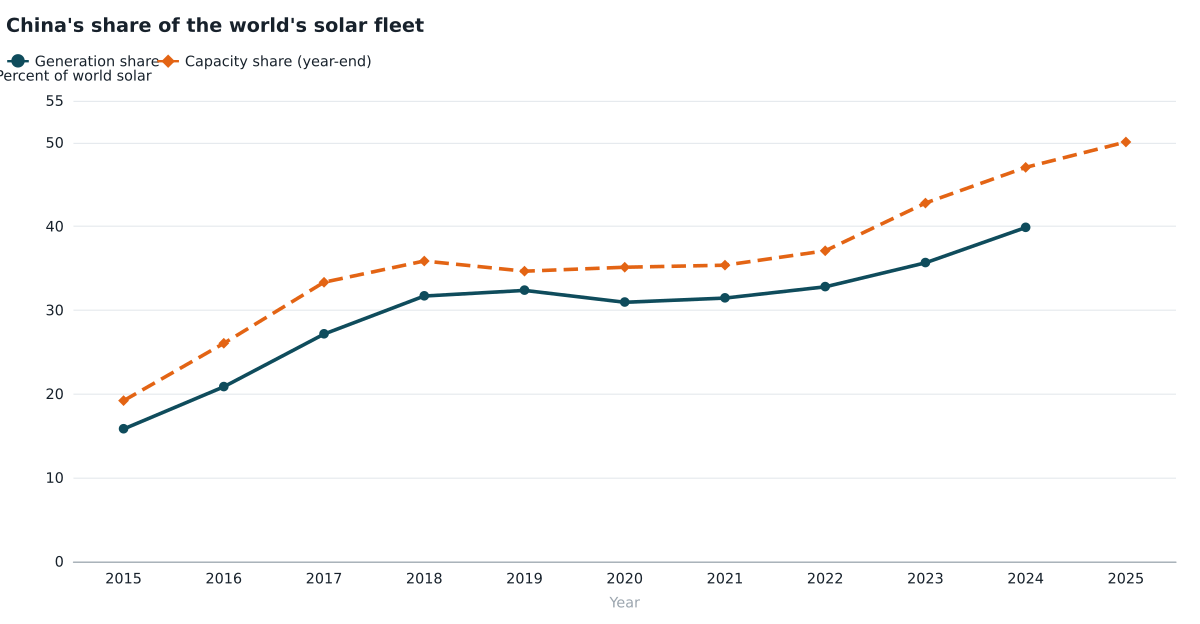
China generated 40 percent of the world's solar electricity in 2024 and hosted half of installed solar capacity by the end of 2025, a share that has been rising since 2015.