LunarWeave
California Already Collects A Quarter Of America's State Income Taxes
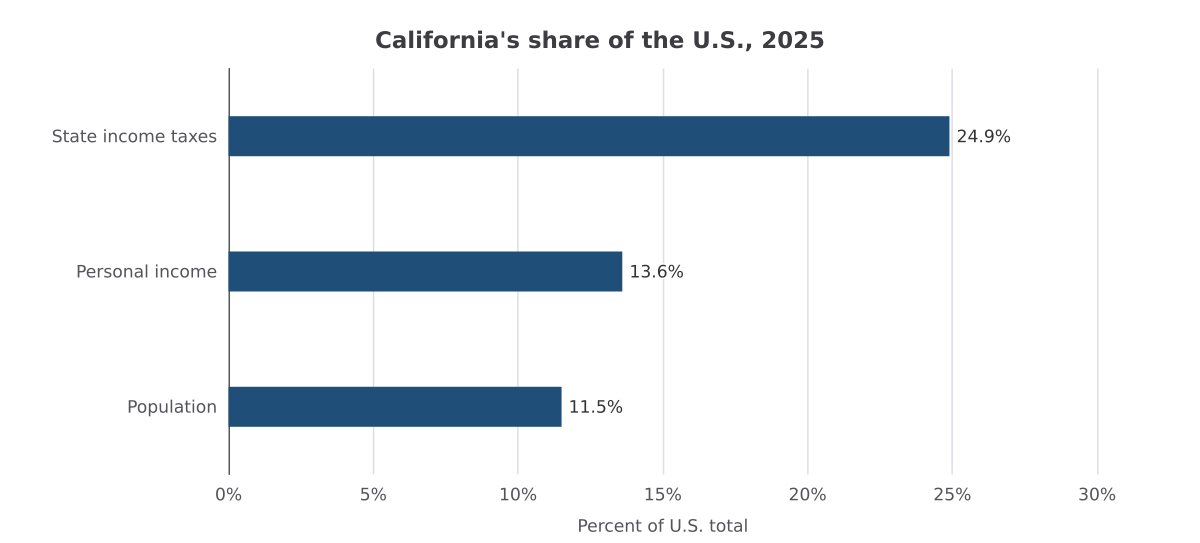
California collected a quarter of U.S. state income taxes in 2025 with 11.5% of the population, then watched those receipts fall a fifth while personal income kept rising.
Standalone, data-led research into the questions behind the news.
California collected a quarter of U.S. state income taxes in 2025 with 11.5% of the population, then watched those receipts fall a fifth while personal income kept rising.
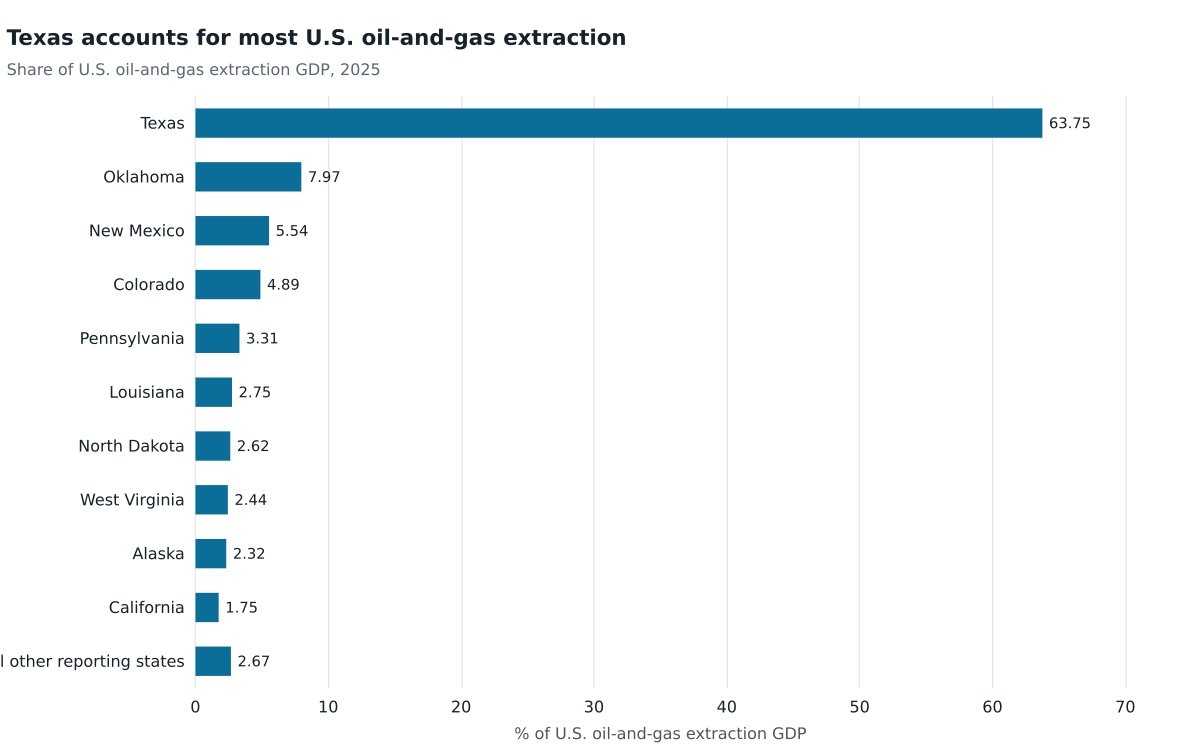
U.S. households everywhere buy motor fuel, but nearly two-thirds of oil-and-gas extraction GDP sits in Texas.
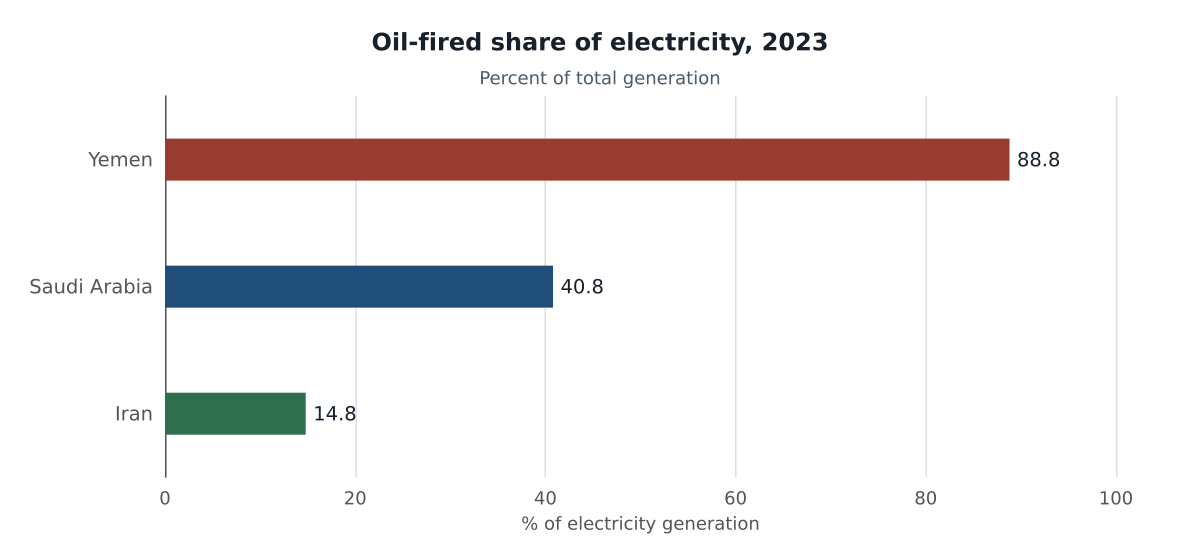
IRENA generation data show oil supplied 88.8% of Yemen's electricity in 2023 after gas-fired output collapsed, versus 40.8% in Saudi Arabia and 14.8% in Iran.
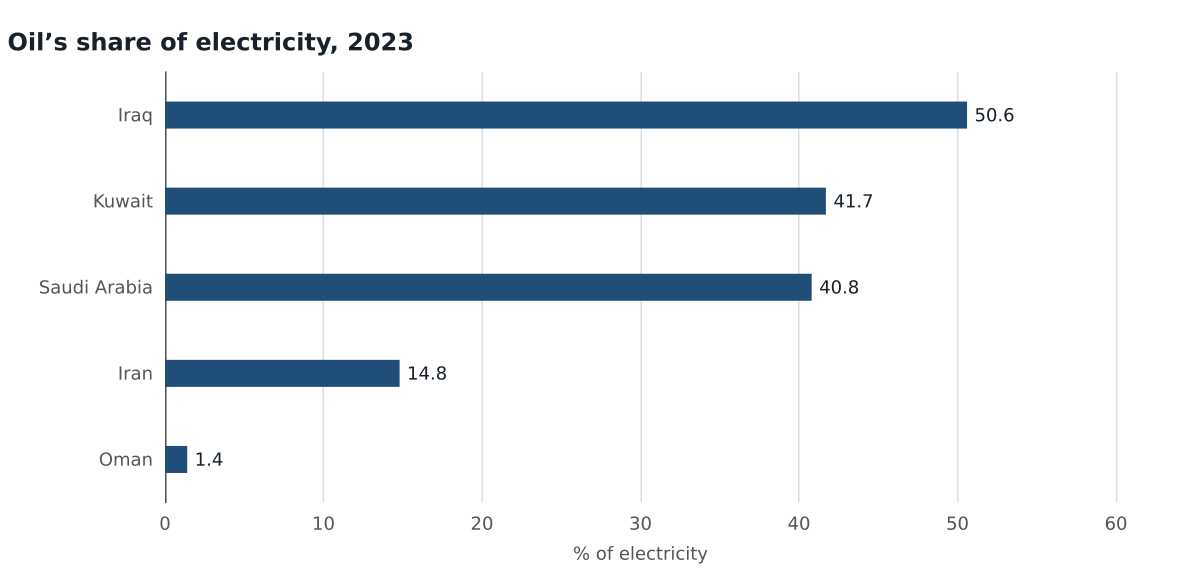
Saudi Arabia, Kuwait and Iraq still generate about two-fifths to half their electricity from oil. The UAE and Qatar do not. That split, not a generic Gulf shortage, is the structural claim o
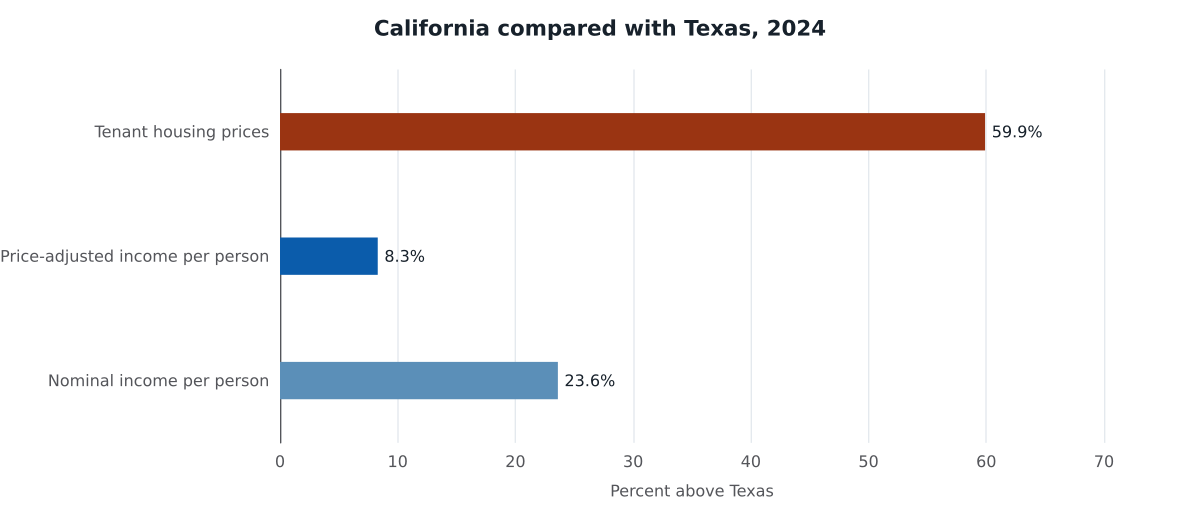
California still out-earns Texas, even after prices. Tenant housing is 60 percent more expensive, and Texas has been adding the jobs.
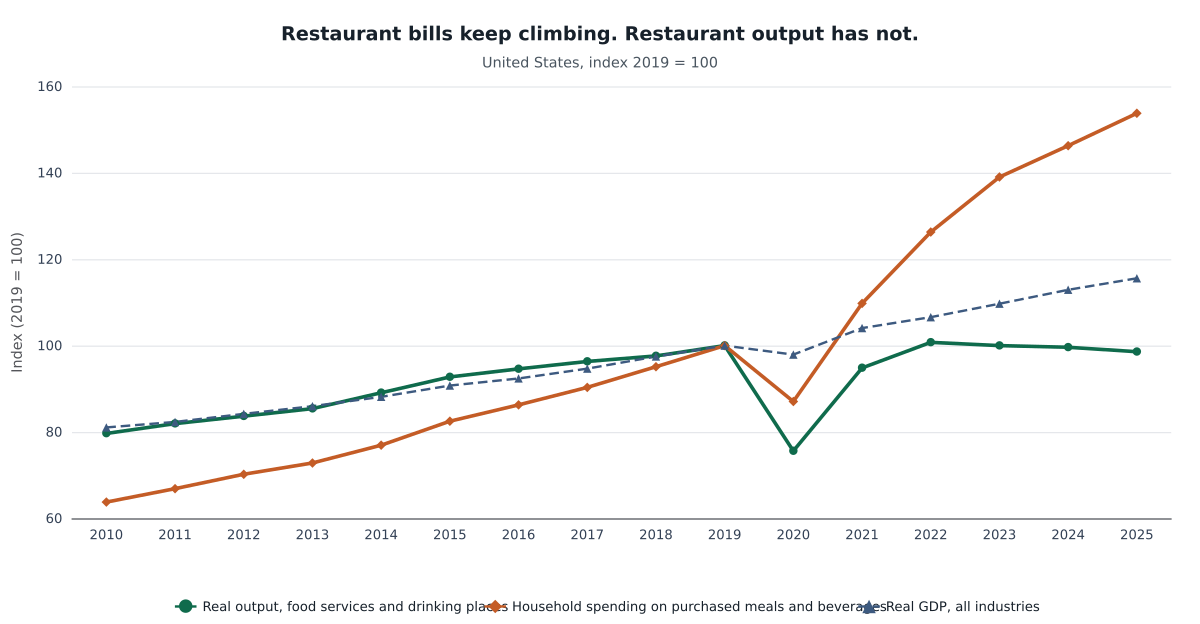
U.S. household spending on restaurant meals kept rising through 2025 while real food-services output fell for three years — the pattern behind claims that weight-loss drugs are rewriting din
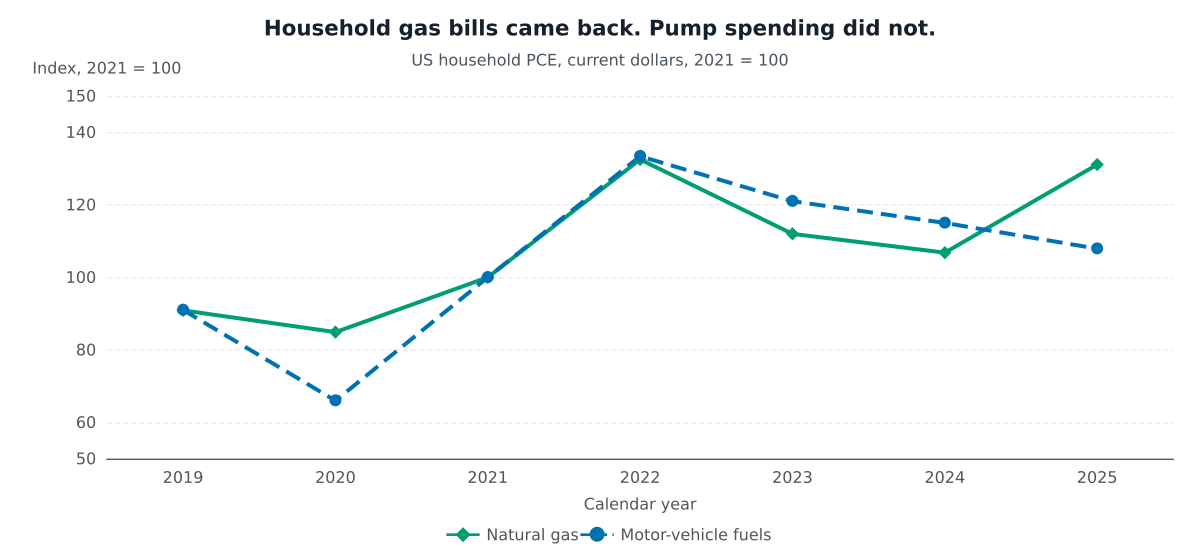
US household natural-gas spending returned to its 2022 level in 2025, while motor-fuel spending kept falling — a mismatch with a diesel bargain aimed at the pump.
The UN's World Meteorological Organization expects the current El Niño — already described as possibly the strongest in at least 76 years — to keep intensifying to a peak in…
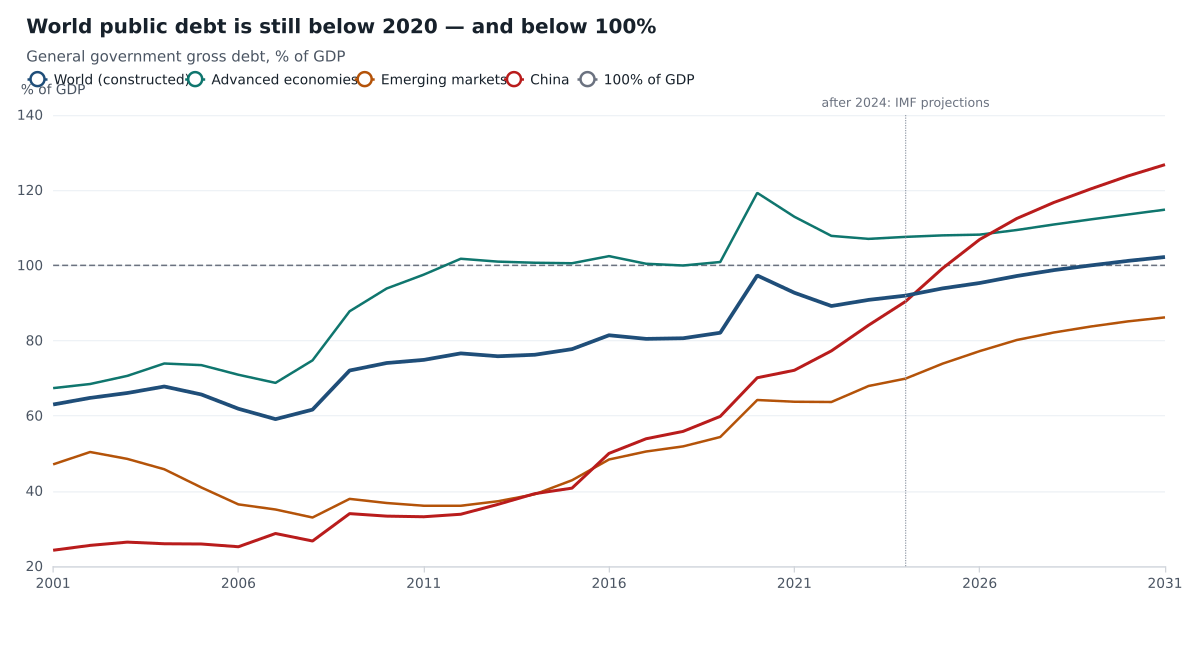
IMF WEO books put world public debt below 100% of GDP until 2029, below the 2020 peak, with China the large economy crossing the line now.
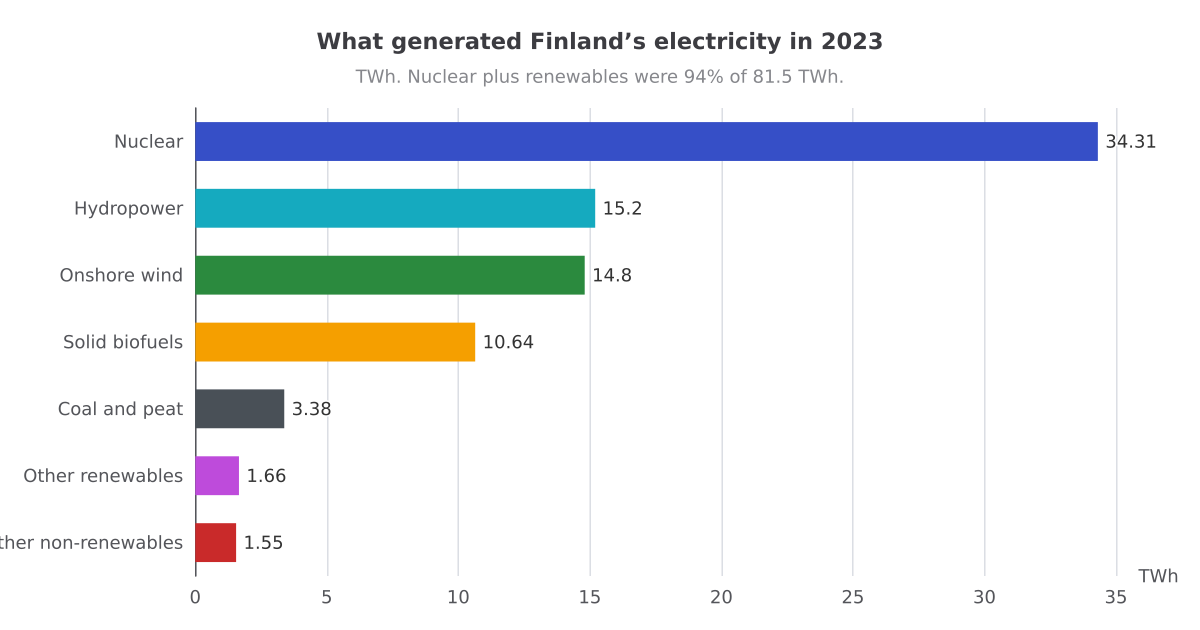
Google’s Finnish data-center pause is a forest and permitting fight. IRENA accounts show a nuclear-and-wind grid that still counts wood as renewable.
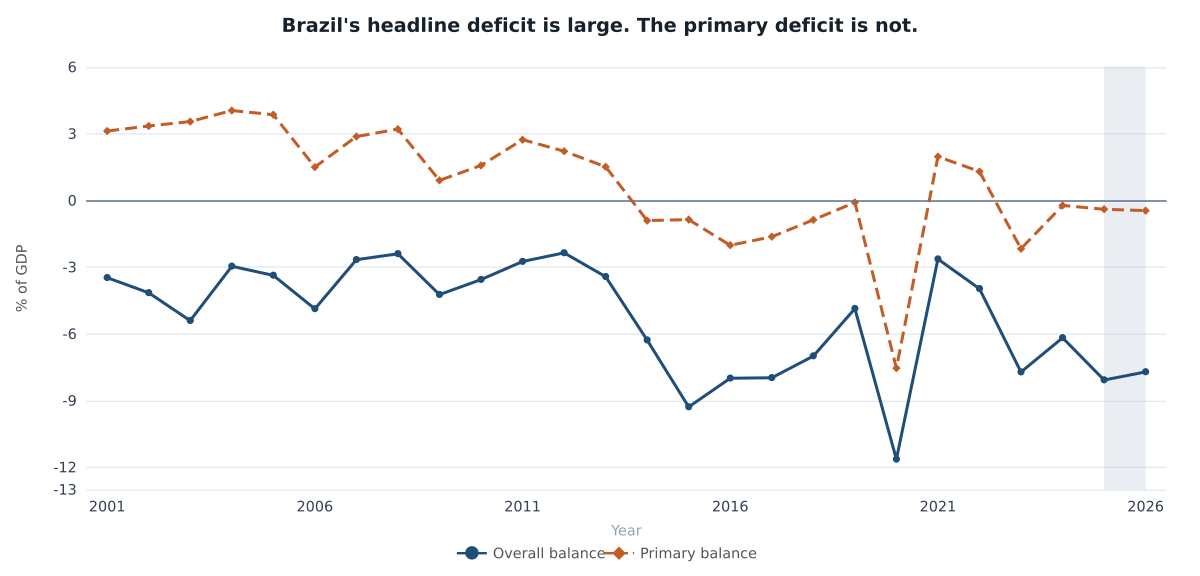
IMF accounts show Brazil’s projected 8% of GDP headline deficit is almost entirely interest; the primary deficit is near zero while public debt returns toward its 2020 peak.
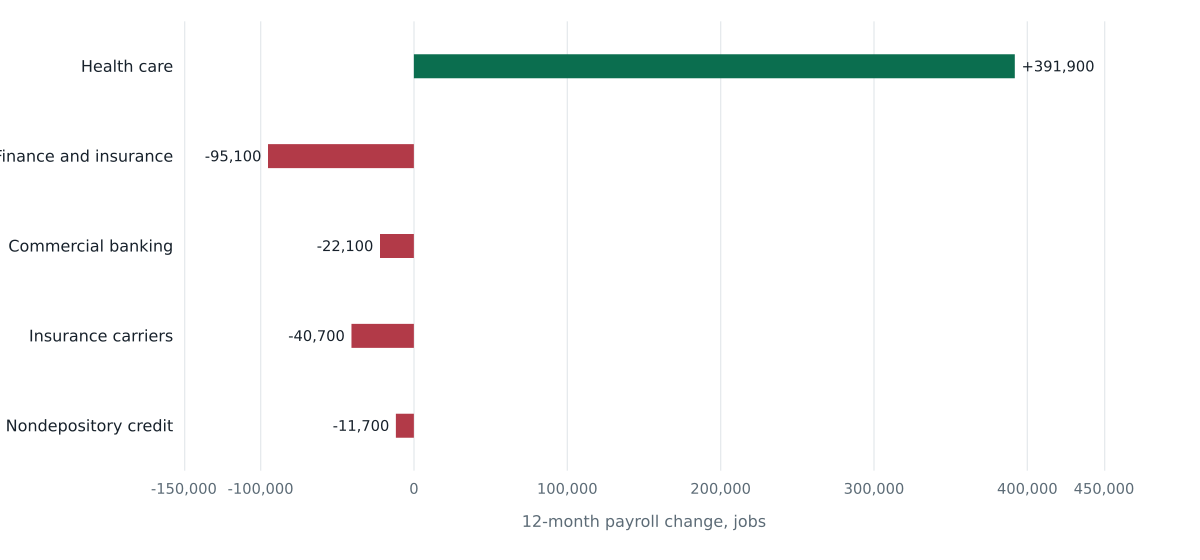
Through July 2026, U.S. health care added more jobs than the entire net payroll gain while finance and insurance lost 95,100. Banks and insurers, not leftover mortgage lenders, account for t