LunarWeave
Hospitals Kept Hiring. Finance Started Shrinking.
The September U.S. jobs report was easy to misread as a one-month wobble. Le Monde reported that employers added only 29,000 payroll jobs, with health care doing most of the hiring and financial services still cutting. That September print is not in the payroll files used here. What those files do show is that the split was already in place.
From July 2025 to July 2026, U.S. Bureau of Labor Statistics seasonally adjusted health-care payrolls rose by 391,900, to 18.52 million. Total nonfarm payrolls rose by only 316,000, to 158.86 million. Payrolls outside health care therefore fell by 75,900. Over the same year, finance and insurance — the closest official stand-in for “financial services” — lost 95,100 jobs.
The U.S. is still adding jobs in the aggregate because clinics, hospitals and other health-care employers are hiring. The finance industry that sat near a record a year earlier is already in reverse.
The arithmetic is not subtle
Health care is a large industry, so it does not take a boom to dominate a weak jobs market. A 2.2 percent rise in health-care payrolls over 12 months more than accounted for the 0.2 percent rise in all nonfarm jobs. Finance and insurance, at 6.65 million jobs in July 2026, is much smaller. A 1.4 percent decline there is still 95,100 fewer paychecks.
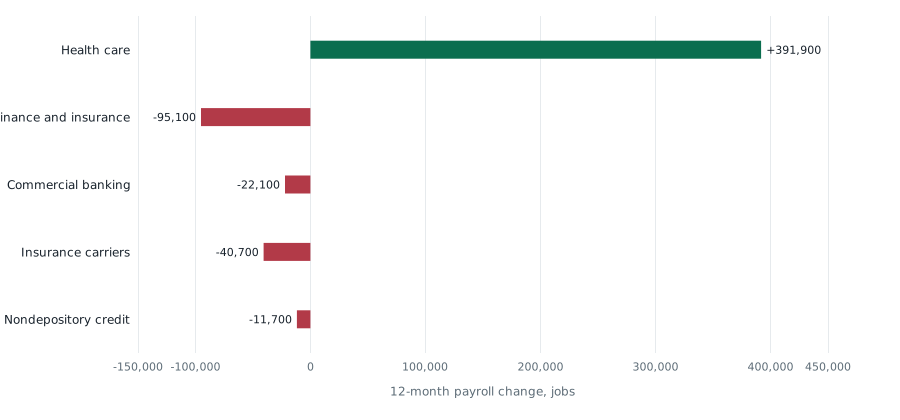
12-month change in U.S. seasonally adjusted payroll jobs. Health care, finance and insurance, commercial banking and nondepository credit: July 2025–July 2026. Insurance carriers: June 2025–June 2026 (latest month in this extract). Source: U.S. Bureau of Labor Statistics, Current Employment Statistics. July 2026 figures are preliminary. The extract ends in July 2026 and does not include the reported September print.
The broader financial-activities supersector, which adds real estate and rental to finance and insurance, peaked at 9.211 million jobs in May 2025 and was 9.090 million in July 2026 — 121,000 below that peak and 114,000 lower than a year earlier. Real-estate payrolls themselves were down only 8,100, or 0.4 percent. The net loss is in finance and insurance, not in the landlord-and-broker slice.
| Industry | 12-month change | Payrolls at end of window | Window |
|---|---|---|---|
| Health care | +391,900 | 18,518,500 | Jul 2025–Jul 2026 |
| Total nonfarm | +316,000 | 158,858,000 | Jul 2025–Jul 2026 |
| Finance and insurance | −95,100 | 6,652,200 | Jul 2025–Jul 2026 |
| Financial activities | −114,000 | 9,090,000 | Jul 2025–Jul 2026 |
| Commercial banking | −22,100 | 1,350,100 | Jul 2025–Jul 2026 |
| Nondepository credit | −11,700 | 490,300 | Jul 2025–Jul 2026 |
| Insurance carriers | −40,700 | 1,577,500 | Jun 2025–Jun 2026 |
| Investment banking and securities | −1,200 | 453,500 | Jun 2025–Jun 2026 |
Seasonally adjusted all-employee payrolls from the Current Employment Statistics survey. Ending levels convert BLS thousands of jobs to job counts.
A rollover, not a crash
Finance and insurance employment is not back at a crisis low. It was still 272,000 jobs above January 2019 and 145,000 above February 2020. The story is a peak and a turn. The industry reached 6.747 million jobs in July 2025, then lost 95,100 over the next year, including 58,200 between January and July 2026.
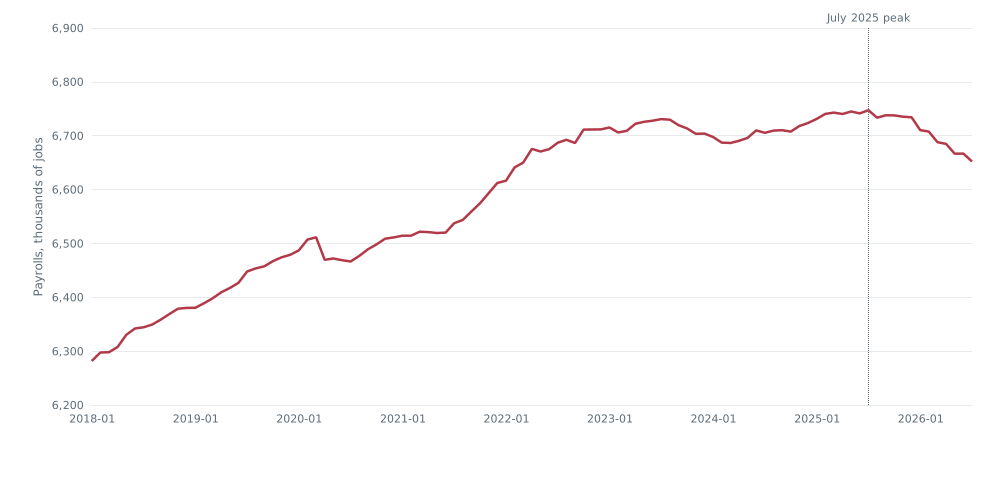
U.S. seasonally adjusted finance and insurance payrolls, thousands of jobs, January 2018–July 2026 (CES 5552000001). Peak: 6,747.3 thousand in July 2025; July 2026: 6,652.2 thousand. Source: U.S. Bureau of Labor Statistics. July 2026 is preliminary.
Indexed to that July 2025 peak, health care kept climbing while finance and insurance fell. The 2020 collapse in health-care jobs is visible on the same chart; so is the long climb that followed. Finance never had a boom of that size. It drifted up for years, then rolled over.
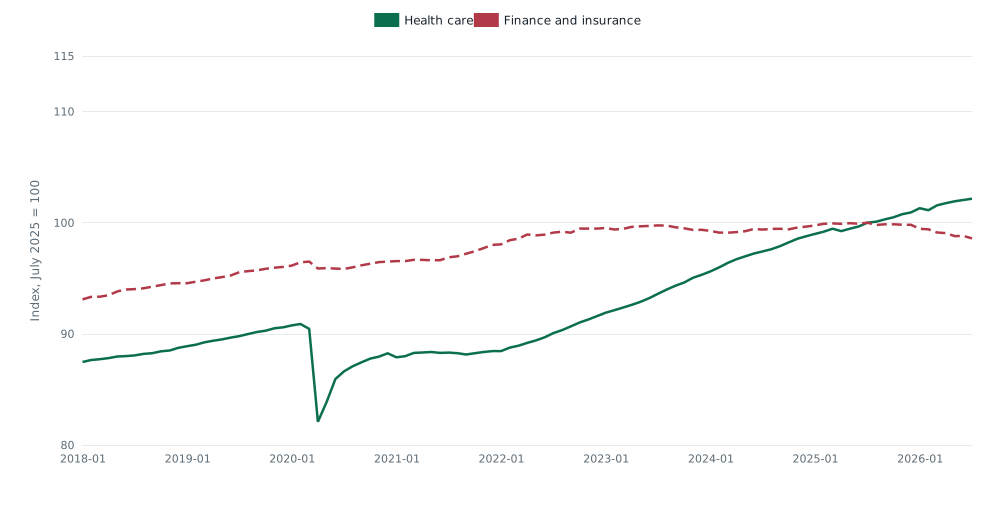
Seasonally adjusted payrolls indexed to 100 in July 2025, the month finance-and-insurance employment peaked in this extract. Health care: CES 6562000101. Finance and insurance: CES 5552000001. January 2018–July 2026. Source: U.S. Bureau of Labor Statistics. July 2026 is preliminary.
The mortgage bust already happened
If “financial services are cutting” calls to mind 2022’s mortgage-lender collapse, that wave is mostly in the past. Nondepository credit intermediation — the industry that includes independent mortgage lenders — peaked at 630,700 jobs in March 2021. By July 2025 it was already down 128,700, or 20 percent. The next 12 months took only another 11,700 jobs. Real-estate credit, the mortgage-lending slice, is 38 percent below its June 2021 peak, but it was nearly unchanged from June 2025 to June 2026.
Commercial banks are a different, slower grind. Their payrolls peaked at 1.405 million in April 2023 and had fallen 54,900 by July 2026, to 1.350 million — the lowest point in this 2018–2026 window. Insurance carriers, whose extract ends in June 2026, lost 40,700 jobs over the year to that month. Investment banking and securities intermediation barely moved (down 1,200).
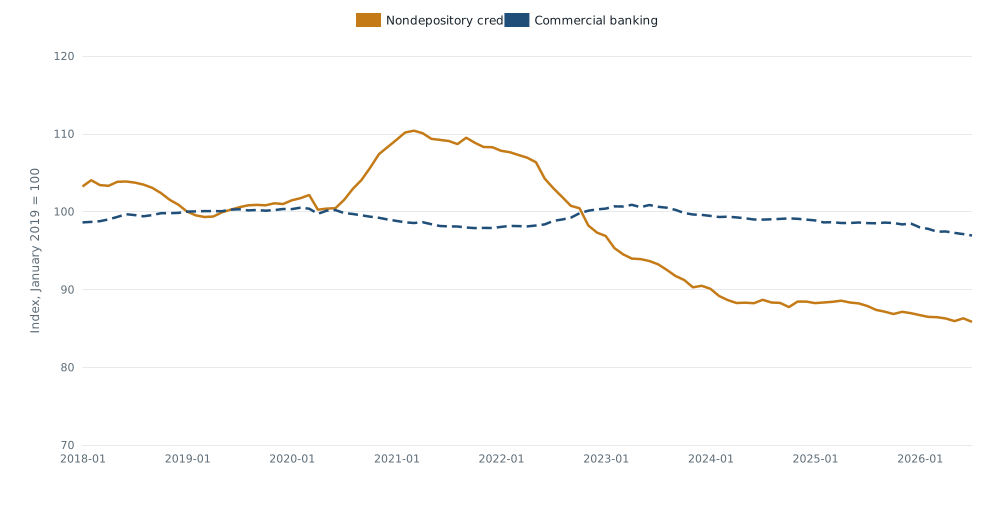
Seasonally adjusted payrolls indexed to 100 in January 2019. Nondepository credit intermediation (CES 5552220001) includes mortgage lenders; commercial banking is CES 5552211001. January 2018–July 2026. Source: U.S. Bureau of Labor Statistics. July 2026 is preliminary. Nondepository credit is a small industry, so percentage swings are larger than the job counts.
The 2025–26 finance contraction is therefore broader and quieter than the mortgage bust: banks and insurers are shrinking, Wall Street headcount is not the driver, and the leftover mortgage-lending industry is no longer the main source of the losses.
None of this says why. CES counts jobs, not motives. Higher-for-longer interest rates, a cooling housing market, commercial-property stress, back-office automation and ordinary attrition can all leave the same footprint. The survey also cannot settle whether September’s reported 29,000-job month continued the July pattern; that month is simply not in this snapshot.
What the files do settle is narrower, and useful. By last summer the U.S. jobs machine was already a health-care machine with a finance leak. A weak headline print in September did not create that split. It arrived on top of it.
Sources and methods
This is retrospective research, written on 5 October 2026, using a Current Employment Statistics snapshot dated 24 August 2026. The news that prompted the question is from 4 October 2026. Later CES releases, including the September 2026 survey, are outside this extract.
All figures are national, seasonally adjusted all-employee payrolls. Industry series are published in thousands of jobs; job counts in the text multiply those figures by 1,000. Health care is CES series CES6562000101, not the broader education-and-health supersector. Finance and insurance is CES5552000001 (NAICS 52). Financial activities (CES5500000001) also includes real estate and rental (NAICS 53). July 2026 observations carry BLS’s preliminary flag. Insurance carriers and investment banking end in June 2026 in this extract; those 12-month changes use June-to-June windows and are labelled as such. Empty is not zero: export and other unused series were not filled in. Payroll employment is not the unemployment-insurance claims count, and an industry decline is not a recession by itself.
Research Date
The displayed date matches the related news edition. Research was completed 2026-10-05.
Related news: Daily · 2026-10-04
More Research
Argentina Is Selling Passports. The Budget Is Already In Surplus.
Argentina’s citizenship-for-dollars programme arrives after the IMF already records a 2024 budget surplus. Inflation is still about 30% and output per person remains below 2011.
U.S. Hiring Stalled In 2025. Real Pay Has Now Flattened Too.
BLS payroll data through July 2026 show U.S. job growth had already slowed to about 20,000 a month on a three-month average, while real hourly earnings stopped rising.
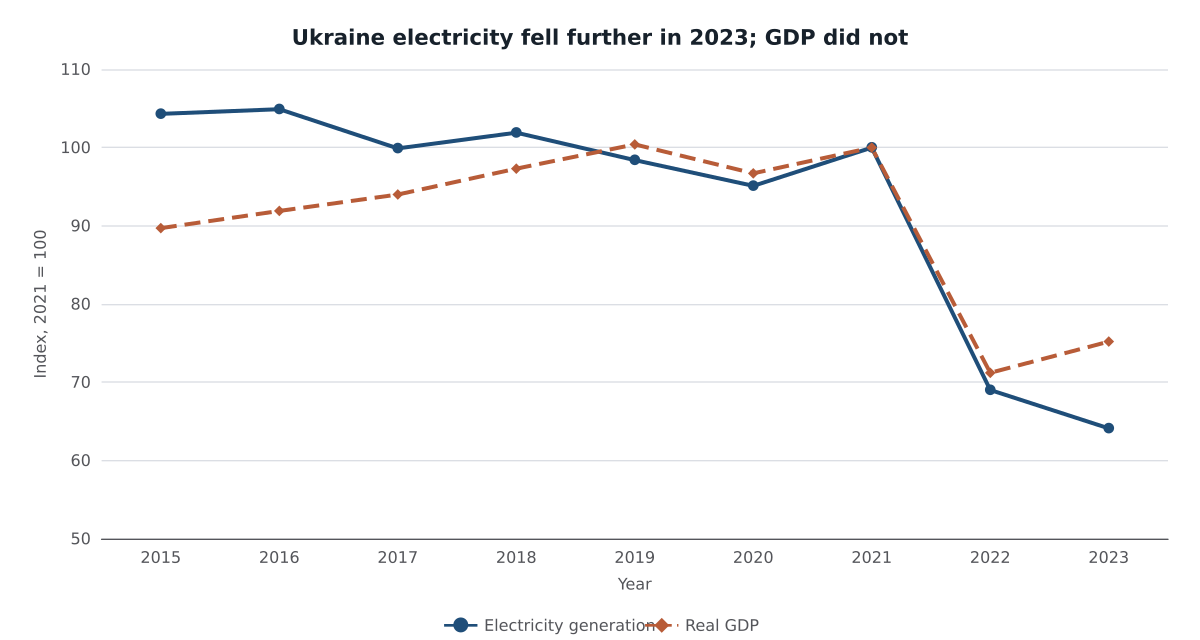
Ukraine Is Heading Into Winter With A Third Less Electricity Than Before The Invasion
Ukraine generated 36 percent less electricity in 2023 than in 2021. Real GDP began to recover that year; the grid did not.