LunarWeave
The Border Surge Ended In February. The Asylum Crackdown Did Not.
When El Universo reported that U.S. immigration judges denied 94 percent of asylum applications in June 2026 and granted protection to only 771 people, the number sounded like a border still overflowing. It was not. By then, Title 8 encounters at the southwest land border had already been running near 11,000 a month for a year and a half — about 4 percent of the December 2023 peak.
The fight over asylum is now a fight about people already in the system, and about interior enforcement. The inflow that filled those dockets collapsed first.
A surge, then a cliff
U.S. Customs and Border Protection counts a southwest land-border encounter as a Border Patrol apprehension or an Office of Field Operations finding of inadmissibility. Restricting that count to Title 8 — the ordinary immigration statute, after Title 42 pandemic expulsions ended in May 2023 — shows a late-2023 spike and a 2025 step-change.
In December 2023, Title 8 southwest encounters reached 301,981. They had already halved by June 2024, to 130,415. They were still 61,445 in January 2025. In February they fell 81 percent in a single month, to 11,710.
They have not come back. From February 2025 through July 2026 — 18 months — the monthly count averaged 11,192 and never rose above 13,538. June 2026, the month of the reported record denial rate, saw 12,907 Title 8 southwest encounters: 96 percent below the December 2023 peak and 90 percent below June 2024.
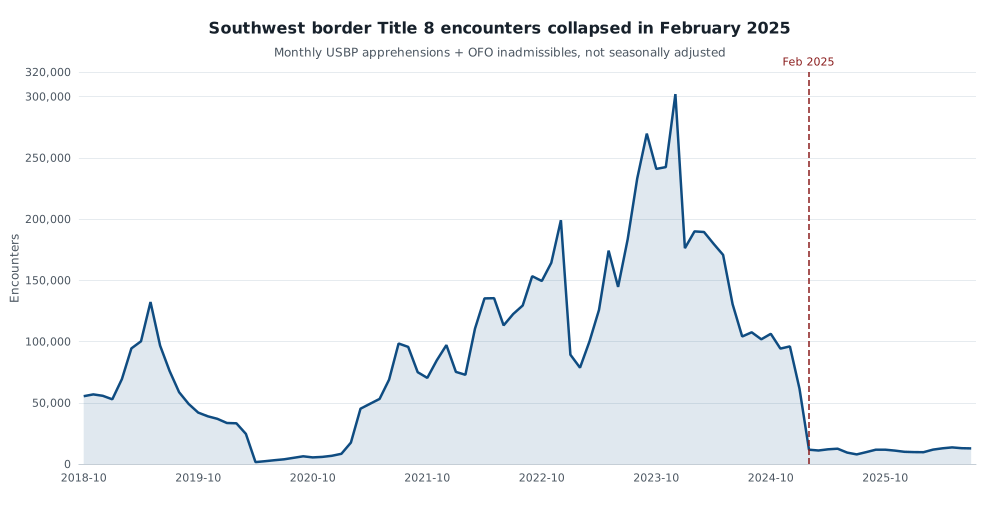
Monthly Title 8 southwest land-border encounters (Border Patrol apprehensions plus Office of Field Operations inadmissibles), not seasonally adjusted, October 2018–July 2026. Title 42 expulsions are excluded, so all-authority totals in 2020–early 2023 were higher. Encounters count events, not unique people, and are not asylum applications. Source: U.S. Customs and Border Protection southwest-border extract through July 2026.
Fiscal 2024 (October 2023–September 2024) still logged 2,135,005 Title 8 southwest encounters. Fiscal 2025 fell 79 percent, to 443,671. The first ten months of fiscal 2026, through July, added only 115,762.
| Month | Title 8 southwest encounters |
|---|---|
| December 2023 (peak) | 301,981 |
| June 2024 | 130,415 |
| January 2025 | 61,445 |
| February 2025 | 11,710 |
| June 2025 | 9,300 |
| June 2026 | 12,907 |
| July 2026 | 12,730 |
Families and extra-regional routes vanished
The people who disappeared were not a random slice of the earlier surge.
In December 2023, CBP’s “Other” citizenship grouping — everyone except Mexico, Guatemala, Honduras and El Salvador — accounted for 170,244 encounters, 56 percent of the Title 8 southwest total. In June 2026 that grouping was 1,356, a 99 percent drop. Guatemala, Honduras and El Salvador together fell from 62,696 to 2,273. Mexico fell too, but less completely: from 69,041 to 9,278. By June 2026 Mexicans were 72 percent of a much smaller flow.
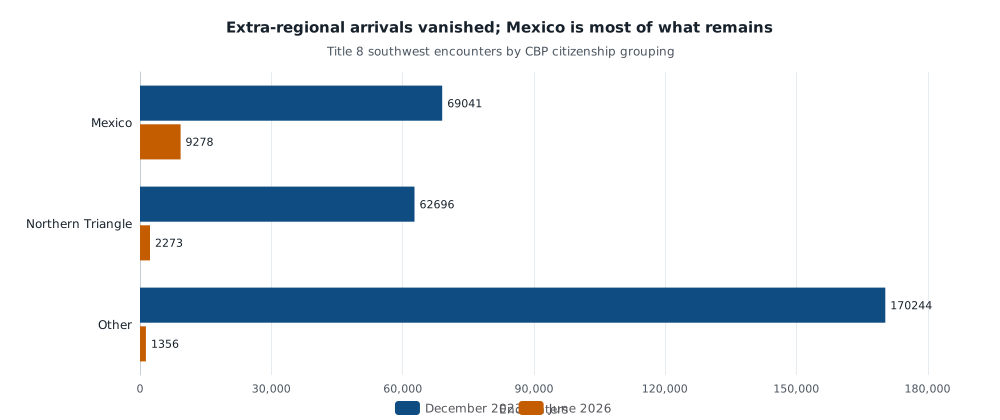
Title 8 southwest encounters in December 2023 versus June 2026, by CBP citizenship grouping. “Other” is every remaining nationality in the extract — including Venezuela, Cuba, Haiti and China — and cannot be read as one country. Source: CBP southwest land-border encounters.
Family-unit encounters (CBP’s FMUA category) went from 123,498 in December 2023 to 495 in June 2026, a 99.6 percent decline. Single adults were 90 percent of the June remnant. Mexican single adults apprehended by Border Patrol under Title 8 — 5,861 that month — were the residual core.
What is left looks like an older, mostly Mexican, mostly adult Border Patrol caseload, not the extra-continental family surge of 2022–24.
Courts and encounters are not the same ledger
None of this is an asylum statistic. An encounter is an arrest between ports or a finding of inadmissibility at a port. It is not a unique person, and it is not an immigration-court filing. Repeat crossings inflate the count. People encountered in 2023 and 2024 are still moving through court. Interior operations — including the Minneapolis enforcement surge in which an ICE officer was charged with lying about shooting a Venezuelan man — are a different system.
The 771 grants reported for June therefore cannot be read as 771 of that month’s 12,907 encounters. The useful fact is sequencing. By the time judges were reported to be denying almost every asylum claim, the southwest Title 8 inflow had already been a trickle for 16 months. A 94 percent denial rate, if that news figure holds, is being applied after the surge ended — not as the thing that ended it.
The encounter books also cannot say why February 2025 was the cliff: U.S. policy, Mexican enforcement, smugglers changing routes, or some mix. They only show that the cliff held, and that June 2026 was not a new wave. It sat inside the same low range that has defined the border since the winter of 2025.
If the political argument is that only extreme denial rates can stop a live crisis at the line, the CBP series says that crisis had already stopped. What remains is an argument about people already in the country — and about a thin Mexican adult trickle that never went to zero.
Methods and sources
This is retrospective research completed 10 September 2026, using later CBP releases than were available on 3 September 2026. Encounter figures come from CBP’s southwest-border extract covering months through July 2026 (release cbp-encounters-2026-07). Title 8 totals are the sum of Border Patrol Title 8 apprehensions and Office of Field Operations Title 8 inadmissibles across CBP’s citizenship groupings, excluding the duplicate “UC / Single Minors” demographic — identical to UAC through September 2024 — and excluding Title 42. Because Title 42 was still in force in 2020 through early 2023, all-authority encounter totals in those years were higher than the Title 8 series shown here. Figures are not seasonally adjusted. Official documentation is on CBP’s southwest land-border encounters page and the public data portal. The June 2026 asylum grant and denial figures are reported news, not CBP data, and were not independently verified here.
Research Date
The displayed date matches the related news edition. Research was completed 2026-09-10.
Related news: Daily · 2026-09-03
More Research
The Black Sea Is Deadly Again. Annual Grain Prices Are Not Back At 2022.
IMF annual wheat averaged $173 a ton in 2025, about half the 2022 peak, even as Black Sea attacks again threaten grain exports.
Japan’s 30-Year-High Yield Is Not This Year’s Interest Bill
Japan’s 3% 10-year yield is a 30-year high, but IMF accounts still show Tokyo paying almost no net interest. Britain’s 2008-level gilt yield is already an interest bill, because the debt sto
Ukraine’s Real Economy Is Still A Fifth Smaller Than Before The Invasion
IMF accounts show Ukraine’s constant-price output still about a fifth below 2021, even as dollar GDP looks recovered.