LunarWeave
Airline Jobs Have Not Collapsed. The Bill Is In The Wage.
When jet fuel jumps or a carrier fails, the familiar picture is empty gates and shrinking payrolls. That is what happened in 2020. It is not what the official US job count shows now.
In July 2026, air transportation still employed 568,400 people on a seasonally adjusted basis — 69,400 more than in January 2019, and only 7,500 below a peak reached in March. The last genuine collapse, in June 2020, cut the industry to 391,000 jobs. A 1.3 percent dip from the highest reading since at least January 2019 is not that hole.
The distinction matters because the 2026 energy scare was easy to narrate as an airline crisis. Shared reports in May said Spirit Airlines was ending 34 years of flying. A circulated quote attributed to Chevron’s chief executive warned that airfares would get worse. Those claims are reported, not independently confirmed here. What the payroll survey can confirm is narrower, and more useful: the people who fly the planes, and the people who keep airports running, have not been sent home in 2020-sized numbers.
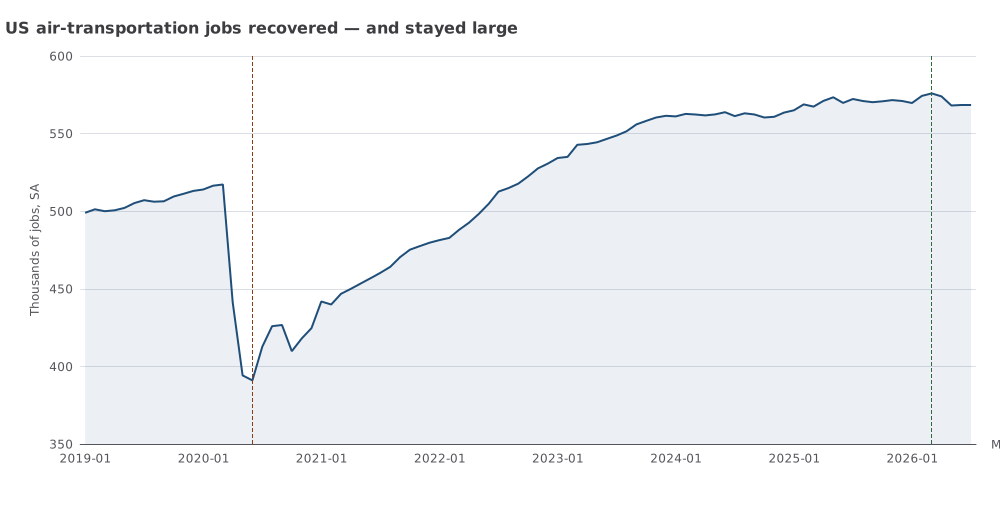
All employees in NAICS 481 air transportation, thousands of jobs, seasonally adjusted, United States, January 2019–July 2026. June and July 2026 are Bureau of Labor Statistics preliminary estimates. The series counts payroll jobs, not unique people, and does not identify individual airlines. Source: U.S. Bureau of Labor Statistics, Current Employment Statistics (CES4348100001).
A small step down from a high perch
Scheduled air transportation — the passenger and cargo airlines, as opposed to charters — tells the same story in slightly sharper form. Jobs there peaked at 519,400 in March 2026 and had slipped to 509,800 by June, a loss of 9,600, or 1.8 percent. That is where a failed low-cost carrier would show up if it showed up at all. It is still 12.2 percent above January 2019.
The Bureau of Labor Statistics does not publish Spirit’s headcount inside these totals. Correlation with a May shutdown report is not proof of cause. What the figures rule out is simpler: there has been no industry-wide wipeout on the flying side of the business.
The ground side is weaker. Support activities for air transportation — airport operations, cargo handling and related services, not the airlines themselves — peaked earlier, at 275,700 jobs in December 2024, and had fallen 10,900, or 4.0 percent, by June 2026. That series was still 16.4 percent above January 2019. The softening is real. It is also modest next to Covid, and it started before the 2026 fuel headlines.
Indexed to each series’ 2019 average, airline payrolls ran ahead of the rest of the US job market through the recovery and were still the higher line in mid-2026.
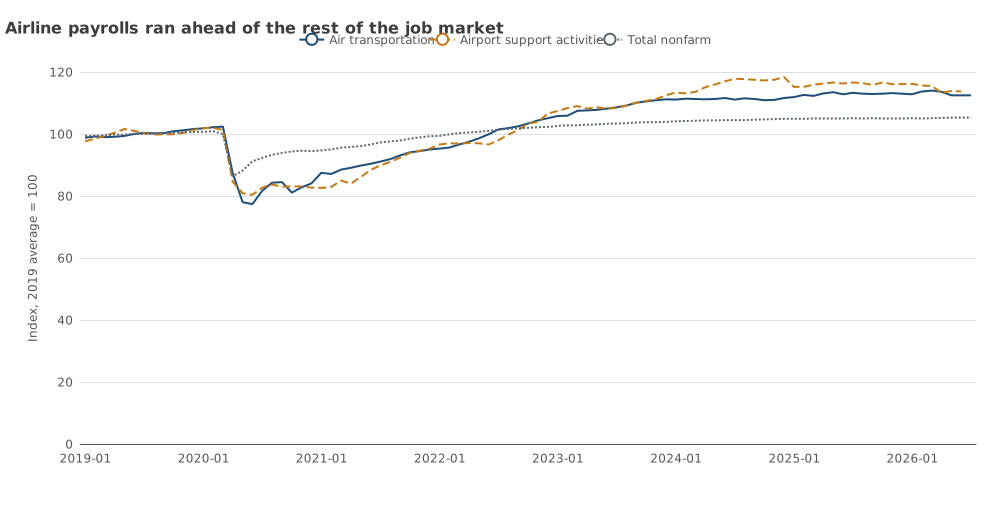
Seasonally adjusted payroll employment indexed to each series’ 2019 monthly average (=100). Air transportation is NAICS 481; support activities for air transportation is NAICS 4881. Total nonfarm is the CES private-plus-government aggregate. Support-activities data end in June 2026; air transportation and total nonfarm include July 2026 preliminary estimates. Source: U.S. Bureau of Labor Statistics.
Air transportation is still a thin slice of the labor market: 568,400 jobs were 0.36 percent of total nonfarm employment in July 2026, and 8.6 percent of transportation and warehousing. A fare shock can hurt travelers without moving the national job count much. That is a reason to watch the industry on its own terms, not a reason to treat a carrier failure as a macro event.
The cost pressure is already on the payroll
If the workforce is still large, the price of that workforce is not the 2019 price. Average hourly earnings in air transportation rose from $34.76 in January 2019 to $50.50 in June 2026, a 45.3 percent increase in current dollars. That figure is not adjusted for consumer inflation, so it is not a measure of real living standards. It is a measure of what airlines pay per hour.
Workers were also on the clock longer. Average weekly hours rose from 31.6 in January 2019 to 36.5 in June 2026, though they had cooled from a 39.6-hour peak in September 2025. More people, more hours, and a much higher hourly rate is the opposite of hidden slack. It is a labor-cost story that would lift fares even if jet fuel were calm.
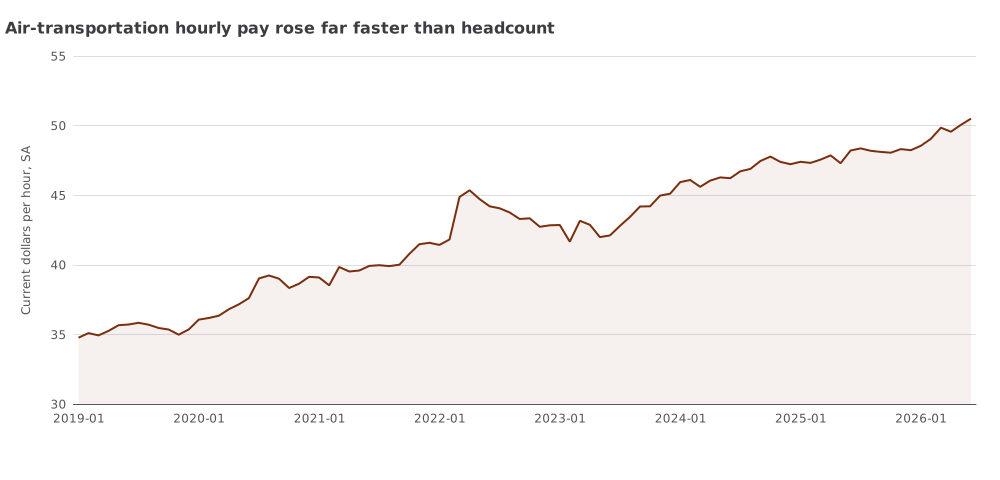
Average hourly earnings of all employees in air transportation, current dollars per hour, seasonally adjusted, January 2019–June 2026. Not adjusted for consumer-price inflation; June 2026 is preliminary. Source: U.S. Bureau of Labor Statistics (CES4348100003).
Households were already spending more current dollars on flying before 2026’s energy scare. According to the Bureau of Economic Analysis, US personal consumption on air transportation fell from $116.5 billion in 2019 to $48.5 billion in 2020, then climbed to $189.1 billion in 2024 — 62.3 percent above 2019 in nominal terms. That is spending, not traffic. Higher fares, more trips, or both can produce the same dollar total. The share of all personal consumption going to air travel still rose, from 0.81 percent in 2019 to 0.95 percent in 2024.
| Year | Air-transportation PCE | Share of total PCE |
|---|---|---|
| 2019 | $116.5 billion | 0.81% |
| 2020 | $48.5 billion | 0.34% |
| 2021 | $101.0 billion | 0.63% |
| 2022 | $153.0 billion | 0.87% |
| 2023 | $168.5 billion | 0.89% |
| 2024 | $189.1 billion | 0.95% |
Household consumption expenditures on air transportation, millions of current dollars converted here to billions, United States. Not adjusted for inflation or for the number of trips. Source: BEA Personal Consumption Expenditures by State, table SAPCE4.
The 2024 spending figures cannot speak to 2026 ticket prices. They do show that, after the pandemic collapse, air travel had already reclaimed — and then exceeded — its pre-Covid claim on household budgets in dollar terms. A new fuel shock would land on an industry that had restaffed, not on one still in mothballs.
What the job count cannot settle
None of this says airfares are cheap, that Spirit did or did not shut down, or that an oil disruption is harmless. The CES survey does not measure profits, load factors, available seats or jet-fuel expense. It does not identify which airlines are hiring or firing. June and July 2026 employment figures are preliminary. Earnings and hours for the more detailed air series stop in June in this snapshot.
A 7,500-job retreat from the March peak could yet deepen. It could also be noise. The comparison that is already solid is the one with 2020: the last time the industry really shrank, it lost more than 100,000 jobs in a few months and did not get them back for years. Mid-2026 still looks like a large, expensive airline workforce — which is a reason fares can rise without payrolls collapsing.
Sources and methods
This is a retrospective analysis. The news that prompted it is from 2 August 2026; the calculations use later pinned snapshots and were made on 10 September 2026. Later data were not available on 2 August 2026.
Employment, hours and earnings come from the US Bureau of Labor Statistics Current Employment Statistics national survey, seasonally adjusted, in the 24 August 2026 CES snapshot (data through July 2026 for air transportation and total nonfarm; through June 2026 for scheduled air, support activities, hourly earnings and weekly hours). Values are thousands of payroll jobs, not unique people. Air transportation is NAICS 481; scheduled air transportation is NAICS 4811; support activities for air transportation is NAICS 4881. Percentage changes are calculated from those published levels.
Household spending comes from BEA Personal Consumption Expenditures by State, table SAPCE4, annual current dollars, United States, in the 26 September 2025 SAPCE vintage (observations through 2024). Current-dollar spending is not a fare index and is not a passenger count.
Reported claims about Spirit Airlines and airfares are taken from contemporaneous community-shared items and are not treated as verified findings.
Research Date
The displayed date matches the related news edition. Research was completed 2026-09-10.
Related news: Daily · 2026-08-02
More Research
Europe’s Oil Shock Is Back. Its Inflation Crisis Is Not.
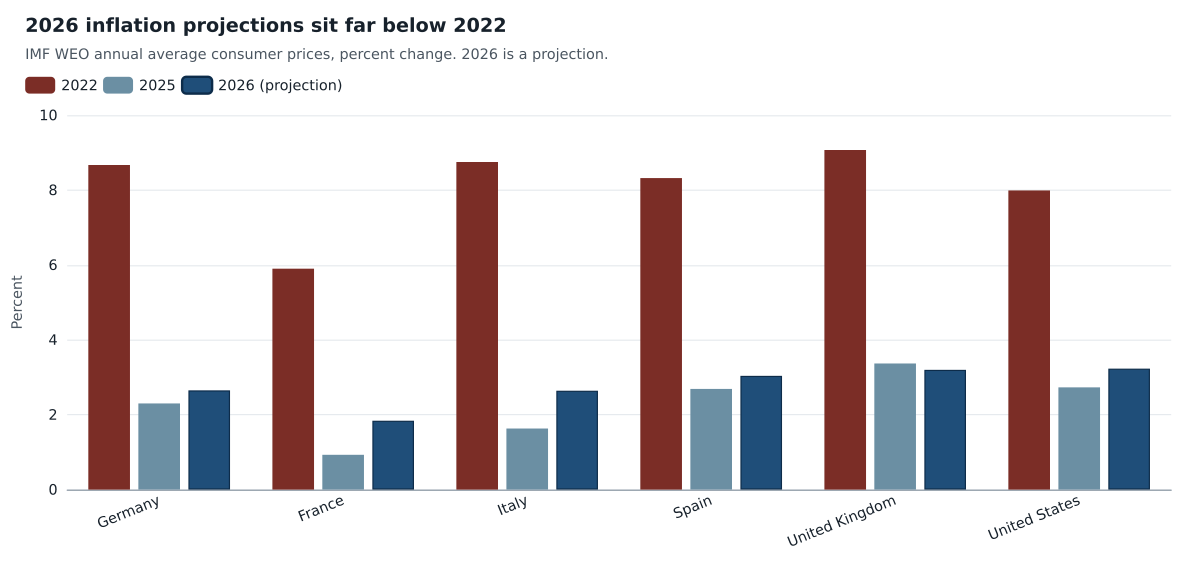
IMF annual inflation in Germany, France, Italy and Spain has not returned to 2022. A 3 percent print is a rebound, not a second energy-crisis peak.
The Ceuta Fence Sits On An Eight-To-One Income Cliff
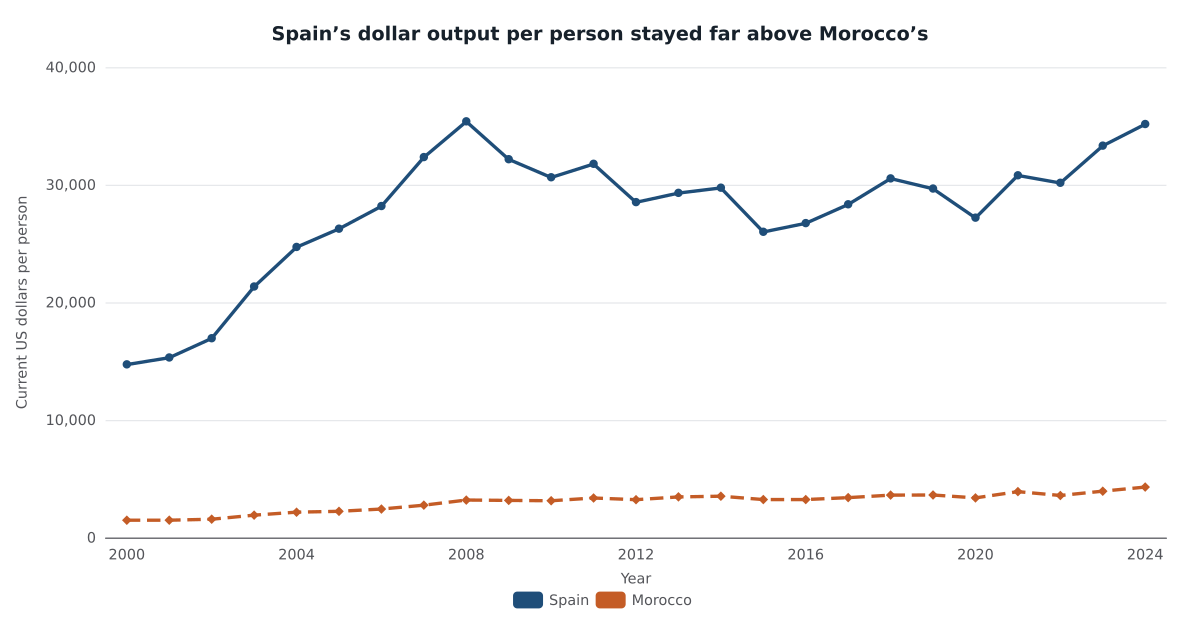
Spain still produces about eight times as much dollar output per person as Morocco. Headline unemployment is not the gap that explains Ceuta.
The Danube Can Take Hungary’s Nuclear Plant Offline. It Cannot Replace It.
In 2023 Hungary generated 45 percent of its electricity from nuclear and 0.6 percent from hydro. A low Danube can take the plant offline; it cannot replace it.